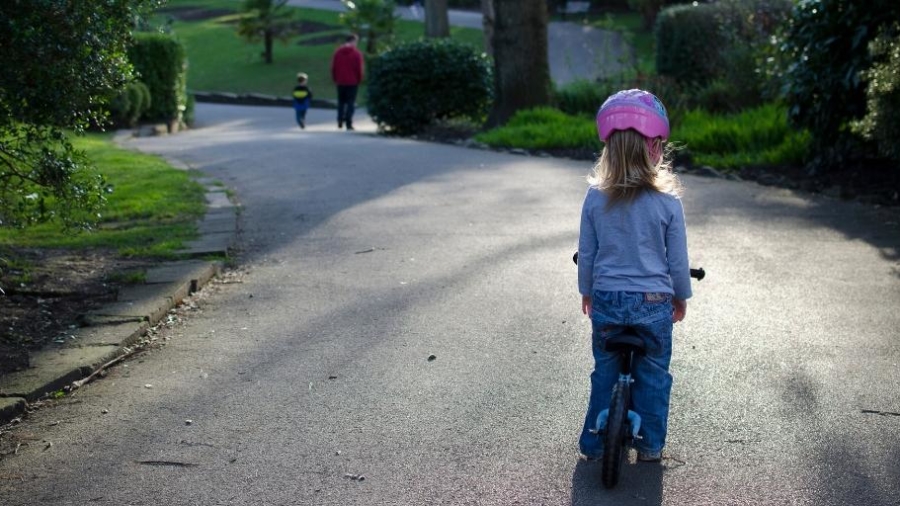
Let go of fear of failure

How to let go of the fear of failure and making mistakes

Have you ever had a great idea, or thought about trying a new sport or hobby, but then talked yourself out of going for it because you were scared that you’d fail at it?

I think we’ve all been there at some point.

The fear of getting things wrong, making mistakes and failing can stop us in our tracks.  Quite often before we’ve even started.  But the thing is, we’ll never do anything or achieve anything if we’re so scared of failing that we don’t even try.

Here are some tips on how we can all let go of that fear of failure and stop worrying so much about making mistakes.

How to let go of the fear of failure and making mistakes


Change how you view mistakes and failures

We all seem to think of failing as something really bad.  For some reason we seem to believe that we always have to get everything right.

I’m not sure when this happens though, because if you look at babies and toddlers you can see that fear of failure and getting things wrong isn’t something we’re born with.

Toddlers learning to walk don’t have this fear.  They fall time and again, but each time they get back up and try again until they can do it.

We need to get back that mindset that in order to grow we need to allow ourselves to fall, to fail, to make mistakes.


Make mistakes on purpose

One way to change our way of thinking about mistakes is to make a few on purpose and see that it’s really not as bad as we think it is.

Now I’m not saying you should go and mess up a deal at work on purpose that would lose the company a fortune.  I’m saying look for something small and safe that you could fail at or do badly.  If you work in an office then maybe you could skip that optional meeting that’s just not important to your role.

Find something small, mess it up and see if the consequences are really as bad as you think they’ll be.  Chances are the impact of you failing will be less than you think it’ll be, which will then make you a bit less scared of making mistakes in the future.


Look at other people’s failures

If you’re still feeling scared then try looking into other people’s failures.

Some of the world’s greatest inventions came about either because someone made a mistake, or because someone failed again and again until they got it right.  From penicillin and post-its to the light bulb and artificial sweetener, all sorts of things have been discovered and invented by mistake or after repeated failures.

Athletes and sports stars are also great to look at to realise that success so often comes after multiple failures.

Michael Jordan once said, “I’ve missed more than 9,000 shots in my career. I’ve lost almost 300 games. 26 times, I’ve been trusted to take the game winning shot and missed. I’ve failed over and over and over again in my life. And that is why I succeed”.


Let other people make mistakes

It gets a lot easier for us to make mistakes, and fail at times, when we create an environment where these things happening is OK.

A while ago I wrote a post about the things I’d like my children to say ‘yes’ to, and failure is one of the things on that list.  I think it’s important to let our children know that it’s OK if they try things and get it wrong.  Or if they take a risk that doesn’t quite pay off.

We should let our children know that they won’t get in trouble if they make a mistake or if they try and fail at something.


I think for most of us the idea of making a mistake or failing at something will always be a little bit scary.

For some people it can be so scary it stops them from ever trying anything new.  It could be that you have mental health issues to work through in order to let go of your fear, in which case talking with a counsellor at thrivetalk.com could help.

As a general rule though, we can take steps to move past this fear ourselves.  The more we try things and push ourselves and allow ourselves to get things wrong, the more we’ll realise that it’s nowhere near as bad as we think it will be.  And the best way to learn and improve at anything is to fail along the way.


Disclaimer: this is a collaborative post

Try this trick to feel more confident

Try this one little trick to help you feel more confident

I remember the first time I took Rhys to baby group.

It had taken me weeks to build up the courage to go, and I felt unbelievably nervous as I made my way there.  Part of the problem for me was the fact that I tend to overthink things.  And then I manage to talk myself out of doing them, because I’ve imagined these worse case scenarios.

It’s the same with all sorts of things, from driving somewhere new to starting up a conversation with someone new at the school gate.

This little trick though can really help me (and you) to feel more confident in pretty much any situation.

Try this one little trick to help you feel more confident


The trick is to pay attention to the thoughts we have about the situation and basically tone them down.

What I mean by this is, to take that worse case scenario that we’re picturing and question it.  Bring in a voice of reason to argue with the little voice in your head who is busy catastrophizing.  Tone down those worries as much as you can.

Let’s use that first visit to baby group as an example.

Before I went I built up this idea in my head that I would go and no one would talk to me at all.  That I would trip on my way in and make a fool out of myself before I even had the chance to say hello to anyone.  That I would try and talk to people and be ignored and I’d end up sitting by myself.

What I should have done is question all of these thoughts.

I should have reassured myself that no one would notice if I tripped on the way in, or pushed the door when it should be pulled open.

I should have reminded myself that it was more than likely that most of the other parents there would have felt nervous the first time they went.  And that they would be friendly and more than happy to talk to me.


This approach can be applied to all sorts of situations.

At work before giving a presentation for the first time you can take thoughts of “I’m going to completely mess this up and I’ll never get promoted and my boss won’t take me seriously” and tone it down to “I might not be amazing at it, but everyone knows this is the first time I’ve done it and they won’t be expecting everything to be perfect”


In an ideal situation we’d just tell ourselves that what we’re thinking isn’t true; we’d ignore those worse-case scenario thoughts and just get on with things.  But I think we all know it’s not that easy.  What is more manageable is working to modify our thoughts, little by little.

Toning down our thoughts from the worst case to scenario to one that is a bit less dramatic and catastrophic can be enough to give us the confidence to go ahead and do what we need to do.

Do you have a tendency to think the worst, or build things up in your head so that they seem much scarier than they are?

If your answer is yes, then try this trick next time you find yourself doing it.  See how much more confident you feel once you challenge that voice and start to tone down your thoughts.


Keep Calm and Carry On Linking Sunday
Make family mealtimes more enjoyable

How to make family mealtimes more enjoyable

How often do you sit down and eat as a family in your house?

I know it’s something my family and I don’t do often enough.  With the children ready to eat almost as soon as they get home from school, eating dinner together during the week just doesn’t work for us.  We try to sit down together for a meal at the weekend but even that doesn’t happen as much as it would in a perfect world.

There are so many benefits to eating together as a family, but it seems to be something that doesn’t happen often enough for lots of families.

Furniture village recently commissioned a survey that looked into mealtime habits in the UK, and the findings are really interesting.  Only 22% of the people asked said that they ate their dinner at the table every night, while 53% said that they eat on the sofa more than anywhere else.

What they also found though was that 70% of the people they asked said that they believed family relationships were strengthened when everyone sat at the table and ate meals together.

It can be hard to find the time though, and when you do have the chance to do it sometimes family meals can be stressful with fussy eaters and no one really talking to each other.  Hopefully these tips will help to make family mealtimes more enjoyable for everyone.

How to make family mealtimes more enjoyable


Get the children to help

It’s easy to feel a bit hard done by if you’re the parent who sorts everything out for family mealtimes.  So get the children in on the action to share the load a bit, as well as get them more interested in the food they’re going to be eating.

Depending on a child’s age they can help with:

  • Menu planning
  • Food shopping
  • Preparing ingredients for the meal
  • Cooking the meal itself
  • Laying the table and clearing up afterwards


Play some games

You can make the dinner table a happy, fun place for everyone to spend time together by playing a few games during mealtimes.

Here are some ideas:

  • Would you rather?  Ask your children age-appropriate questions like “would you rather be the teacher at school or a student?”.  You can ask really silly questions or more serious ones, depending on the mood everyone is in.
  • Who am I?  This is a game we play in the car sometimes.  One person thinks of someone (normally someone we know in real life) and the others ask them yes or no questions to try and work out who they’re thinking of.
  • What am I?  This is basically the same game, but you think of an object rather than a person.
  • Carry on the story.  One person starts a story, along the lines of ‘once upon a time there was a little girl with blond hair’.  Then the next person makes up the next line of the story, and then go around the table with each person adding more to it.  The aim really is to make the story as silly as possible.
  • ABC.  Think of a topic like countries or foods or people’s names and then go around the table coming up with an answer for each letter of the alphabet.


Get the conversation going

If you’d rather chat with your children than play games, then you can start a conversation by asking what the best and worst parts of their day were.

Then move on to more random conversation topics, like:

  • If a genie granted you a wish, what would you wish for and why?
  • If you could pick a new name for yourself, what would it be?
  • If you were a superhero, what would your special power be?
  • If you could only eat one food for the next week, what would you chose?
  • If you could visit the setting of any book or tv programme, where would you go?

The great thing about these kinds of questions is they’re quite fun for the adults to answer too.


I know these ideas won’t magically solve issues with fussy eaters or get fidgety little ones to sit still and eat their food.  

There are always circumstances that make mealtimes stressful and no fun for anyone involved.  Hopefully though these tips will help to get children more interested in sitting down together.  They might distract them enough that they’ll put more food in their mouths without a big fuss.  They might engage them enough that they’ll stay sitting at the table that bit longer.

Do you have any other tips to make mealtimes more enjoyable for the whole family?


Introvert parent's guide to making small talk

The introvert parent’s guide to making small talk

I had a cuppa and a catch up with a friend the other day.

We hadn’t seen each other for a month or two and it was really lovely to chat and get up to date on what’s been going on in each other’s lives.  That evening I was talking to my husband about it, and how it had suddenly occurred to me that we had been friends for around 7 years now.

It just felt like such a long time ago that we met as exhausted first-time mums at the local NCT baby group.  And it was so lovely to think how our friendship has developed and how openly and honestly we can talk to each other about things.

It makes me so glad that I pushed myself to go to baby group all those years ago.  That I stepped out of my introvert comfort zone and started making small talk with the other mums there.

I know a lot of introverts really struggle with small talk.  For me it’s more about social anxiety but I know for others it’s about wanting to go deeper than small talk and chit-chat allows.  The thing is though, you have to go through that small talk phase to be able to build relationships and make friends.

So, here is my guide to making small talk for introverted parents.

The introverted parent's guide to making small talk


Whether you’re a brand new parent heading to baby group or you have older children and want to get to know people at the school gates, these ideas will help.


Break the ice

Take a deep breath, this is the hard part for so many of us.

If you see someone you want to chat with then you’ll need to find a way to break the ice and get the conversation going.

Jennifer Latson, author of ‘the boy who loved too much‘ suggests a three-step approach to greeting people.

  1. Compliment them.  It can be as simple as saying how much you love their baby’s name, or how happy their child is going into school.
  2. Ask about their well-being.  You can go with a simple, ‘how are you today?’ or go a bit further and ask if they were struggling with the morning rush to get to school on time like you are!
  3. Choose a topic to chat about that is relevant to them.  This is pretty easy if you have children the same age, you can just ask their thoughts on any issue you’re dealing with at the moment, or how great different parts of being a parent are.


Ask open-ended questions

This is a classic way of getting conversations flowing.

People quite like to talk about themselves, so showing interest and asking questions is a great way to start chatting.  The trick though is to steer away from ‘yes’ or ‘no’ questions which can stop a conversation in its tracks.

One way to do this is to ask ‘why’ questions instead of ‘what’ questions.

So at baby group you can ask someone their baby’s name, and then keep the conversation going by asking if there was a reason or special significance behind their choice.


Return their questions

If you find it hard to think of questions to ask, you can just wait for them to ask you one and then ask the same one back.

So when they ask you “Is this your first baby?”, you can reply “No, it’s my second, how about you?”


Introvert parent's guide to making small talk


Make other parents feel like you care about them

Ask their name (not just their child’s name) and use it when you speak to them.  When we’re used to being called ‘so and so’s mum’  that it feels quite special when someone makes the effort to call us by our actual name.

If you’re sitting with a few other mums at baby group or at the school gates then make sure to bring everyone into the conversation.  If you notice that one parent in particular seems to be left out, make a point of directing some questions to her and making sure she’s ok.


Ask fact-based questions to start a conversation.

At baby group ask if they know what time it finishes, or if there are any other nice groups that they know of in the area.  At the school gates you can ask about homework, or events that the PTA are planning.  You could ask if they know which swim school is best to go with locally, or if they know of a good karate or ballet class.


Find a common enemy.

There’s something about complaining together that brings people together.  And while being a parent is wonderful there are also lots of things that we can complain about, all of which make pretty good topics of conversation.

Lack of sleep, teething and weaning troubles are good things to complain about together when your baby is little.


As your child gets older then there are bound to be all sorts of school related issues that you can bond over.  It can be as mundane as complaining about the fact that it always rains during the school run, it will still break the ice and get you chatting.


I know for a lot of introverts small talk is painful. 

You want to go deeper than chat about the weather.  But you have to go through the small talk stage to connect with people and move on to the next level, so hopefully these tips will help make the process a bit easier.

affects of temperature

The surprising ways we’re affected by temperature

The weather, and the temperature in particular, has been a real topic of conversation over the last few months.

The recent heatwave that seemed to go on forever was being discussed everywhere you went, and all over social media.  And now we’re not even in September and people are starting to talk about how chilly it’s getting and debating whether or not they should put the heating on.

The perfect temperature at home is definitely a subject for debate, but First Utility are looking to end the discussion with their guide to the ideal room temperatures throughout our homes.  When it comes to our general well-being at home then it seems that a temperature of around 21 degrees is best.

It’s not just about our comfort though, feeling hot or cold can have all sorts of interesting effects on us.

the surprising ways we're affected by temperature

Temperature influences our creativity

Research has found that different types of creativity can be encouraged depending on whether we feel hot or cold.

People in one particular study were made to feel warm in a variety of ways. They were given a hot cup of tea to drink, or were placed in a warm room for the study. Under these circumstances they were better at creative drawing and coming up with ideas for presents for other people, amongst other things.

When they were made to feel cold instead, however, they were better at recognising metaphors and thinking of abstract gift ideas.

In this case it seems that being warm helps people with warm relational creativity. So, they might feel psychologically closer to other people and more generous towards them. While being cold seems to produce more distant and cold processing, as they feel colder and more distanced from other people.


It changes how we view people

And how much we cooperate with them.

I’ve written before about how holding a warm drink can change the way we view other people.  We’re more likely to see them as warm and friendly while we have a nice warm cup of tea in our hands.

Research has shown that it goes further than this though.

A study carried out in 2013 called ‘the iterated prisoner’s dilemma‘ found that temperature can also affect how much trust we put in another person and how willing we are to cooperate with them.

In the study participants were put into pairs and put in a pretend jail. They were told that the authorities didn’t have enough evidence to convict either of them but that they each needed to testify against the other.

Some of the participants were given hand warmers to hold during the experiment and others were given ice packs.  The study found that the people with the hand warmers were twice as likely to cooperate with their cell mate and refuse to testify against them.

The researchers believe that it’s possible that the physical feeling of warmth increased the warmth the participants felt towards each other and increased their interpersonal trust of one another.

temperature changes how we view people


It influences the way women dress

We all know that the weather affects the way we dress.

In summer we wear light clothes. Dresses and shorts to try and keep cool. Whereas in winter we layer up in warm and cosy jumpers and cardies.

Researchers have found something quite interesting though, that is specific to women.

One particular study found that women were more likely to wear clothes in shades of red and pink on days when they’re ovulating.  The theory put forward by the researchers is that this is down to a subconscious idea of these colours making us more attractive to potential partners.  Jessica Tracy, lead author of the study, wrote that “the basic idea is that read and pink colours are sort of a sexual signal”.

What’s really interesting though is that this preference for red and pink clothing during ovulation only appeared in the colder winter months.

Tracy says “maybe what’s going on here is that in the summer when it’s warmer, women have more ways of dressing seductively”.  In the winter though it’s normally too cold for things like shorter skirts and low-cut tops, so we choose colour instead.  She also noted that it’s pretty controversial to suggest this idea that women behave differently when they’re ovulating but all sorts of other studies have shown that it does happen in various ways.


When it comes to finding the ideal temperature for our homes it might be worth thinking beyond our physical comfort.

With the knowledge of how the temperature affects us we can potentially create the environment that we want.  So we can make our home a little warmer to encourage our children to cooperate with each other more, or lower the temperature if we need to work on problem solving or a task that needs a bit of critical thinking.


Disclaimer: this is a collaborative post

Psychological benefits of taking a shower

3 psychological benefits of taking a shower

I always used to be a real bath person.

I loved running a hot, deep bath and taking my time relaxing there with a magazine.

Then I had the children and didn’t really have the time for that any more, and showers took over.  And now I think I genuinely prefer showers to baths.  I think it’s something to do with the constantly running water; the sensation of it and the sound of it.

I might be onto something with this too, as there are quite a few benefits of showering.  Here are 3 reasons you should take a bit of time for yourself and head for the shower.

3 psychological benefits of taking a shower


Better sleep

If you have a shower in the evening, which is often the only time you have the peace and quiet to do it as a busy parent, then you’ll get the lovely benefit of a better night’s sleep.

A nice, warm shower before getting into bed can help to relax your muscles and calm you down so you fall asleep more easily.

If you’re feeling braver though then a cold blast from the shower can also help you sleep better.

After a few minutes in the cold water you sort of get used to it.  Then when you get out into the warmth of your bedroom you’ll find that the comforting change in temperature helps to relax your body.  Which again makes it easier to fall asleep.


More energy

If you’re able to jump in the shower first thing in the morning then you’ll get the benefit of a nice little energy boost.

A cold blast at the end of your shower is the best way to really get the benefit though.  The cold water stimulates blood flow around your body, which basically means more oxygen travels round your body too, making you feel more alert and energised.


Peace and quiet

Quite often the only time busy parents get to themselves in the day is when they’re in the shower and there are loads of benefits to our emotional and physical health to taking that time on a regular basis.

The warm water helps to relax us and the white noise that the shower creates can be lovely and soothing too.  Research has even shown that having a shower can increase the level of oxytocin in our bodies.  This then helps us feel less stressed and reduces anxiety.


So don’t feel guilty next time you take a bit of extra time in the shower. 

You’ll be getting so many different benefits from improved sleep to feeling calmer, which will then benefit the whole family.

In fact I think it’s a great idea to really indulge in a nice long shower on a regular basis.

Use all your favourite products and put a deep conditioning treatment on your hair (the steam will help it work even better).  Maybe even think about upgrading your shower to an all-singing all-dancing one with a twin impeller shower pump from Pump Sales Direct so you know the water pressure will be just right every time.

And if you can stand it, turn the water to cold for the last minute of your shower for extra health benefits.


Disclaimer: this is a collaborative post

Reasons to take up golf

3 reasons to take up golf

Do you play golf?

It’s not something I’ve ever really considered playing myself, but my in-laws both play it on a regular basis and absolutely love it.

There are definitely benefits to playing a few rounds, and the fact that people seem to get hooked quite easily once they start playing suggests that it’s something worth thinking about.

Here are 3 great reasons to take up playing golf.

3 reasons to take up golf

It’s good exercise

Apparently the average golfer will walk around 8 km during an 18 hole round of golf.  Which works out at about 10,000 steps, the target amount of steps for lots of us fitness-tracker-wearers.

What’s great about golf is that you’re distracted by the game rather than thinking all the time about how much walking you’re doing.  Then before you know it you’ve reached your target number of steps for the day.

Researchers in Edinburgh reviewed 5000 studies into gold and well-being and found that there are lots of benefits to playing golf as a form of exercise.  It has various long-term benefits to our mental health and improves our cardiovascular, respiratory and metabolic health.


It’s social

Playing golf can be a really great social activity, as you take your time going round the course, chatting as you go.  And then there’s the time you can spend in the golf club afterwards, enjoying a drink and getting to know some of the other members.

There’s also something to be said for the positive effects that the dress code has on the social side of things.

The fact that everyone is dressed in a similar style helps to foster a sort of team spirit, making you feel part of something.  You can still express a bit of individuality though; these golf jackets from Function 18 come in a variety of colours so you can pick something that that feels like ‘you’ while still fitting in with the dress code.


It gets you out in the fresh air

While there are some places you can practice your golf skills indoors, most of the time you’ll be outside in the fresh air.

There are so many benefits to getting a good, regular dose of fresh air.  It leaves us feeling energised, less stressed and noticeably happier.  A lot of sports take place outside, but golf especially includes a real element of spending time in nature.

This time spent outside in green spaces does wonders for our sense of well-being, and we also get the added benefits of a dose of vitamin D from being out in the sunshine.  Studies have shown that getting enough vitamin D can help to ward off all sorts of things from heart disease to the flu.


So there you go, 3 great reasons for us all to think about taking up golf.  I’m still not sure it’s for me at the moment, but I can understand why so many people enjoy it, with the fresh air and exercise it provides giving them a good dose of feel-good serotonin and dopamine.

Have you ever played, or is it something that you think you’ll take up playing at some point?


Disclaimer: this is a collaborative post