Benefits of outdoor play for learning and development

The importance of outdoor play in learning and development

Most days after school, if it’s dry enough, we stay and let the children play for a bit before heading home.

They play in the school yard which has a brilliant wooden fort and little obstacle course which is fantastic for them to burn off some steam after a day at school. The outdoor space and facilities are great at our school, and there is quite an emphasis on outdoor play and learning there that I really love.  The children are encouraged to get out and get stuck in and often come home muddy and dishevelled.

The school is really on to something with this I think, because there are all sorts of benefits to outdoor play in terms of our children’s learning and development.

The importance of outdoor play in learning and development


Swiss psychologist Jean Piaget once said “Play is the work of childhood” and that is a sentiment that I really love.

Mr Rogers actually took this idea a bit further when he said, “Play is often talked about as if it were a relief from serious learning. But for children, play is serious learning.”


The thing is, children aren’t built to sit still and focus on learning.  Apparently up until they’re at least 9 years old children learn best when their whole self is involved in the process.  So sitting at a table and listening to a teacher talk isn’t going to help them learn as much as actively getting involved in something.


Young children in particular learn best through play.

When they’re playing they’re learning how to solve problems and they’re being creative and experimenting in all sorts of ways.  Play does so much to support our children’s cognitive development.  It’s through play that they learn skills like understanding and communication, as well as things like risk assessment and cause and effect.


What seems to be really important though is that the play needs to be unstructured.

Children don’t learn in the same way if adults are directing their play.  They need to be left to explore and play the way they want to play to really get the benefits.

This is one of the things I love about the play equipment at our school – it’s not obvious what each piece should be used for.

There are quite a few wooden structures that can be a fort, a stage, a family home, or whatever else the children can come up.  There are also shapes and tracks and games painted on the ground too which are brilliant for creative play and learning.

ESP play produce all sorts of play equipment and playground markings like the ones our school has, and have spent a lot of time researching the benefits of them.  If you pop over to ESP play’s website you can see their findings into the effects that outdoor creative play can have.  They have playground equipment for all ages from pieces suitable for early years play all the way up to secondary school.

They recognise findings from various studies that show that children need this kind of play environment where they aren’t restricted in the way they play.

So the children are free to come up with their own ideas and use the equipment creatively.  When children have this freedom to make up their own games, either by themselves or with other children, they learn so much.

Imaginative play outdoors

They learn to figure things out on their own, to communicate better and to negotiate.  These types of skills are known as executive function skills and they’re so important for our children’s development.

Sergio Pellis, a researcher at the University of Lethbridge in Alberta, Canada, explains that the best way for children to learn is through free-play.  He says:

“No coaches, no umpires, no rule books…Whether it’s rough-and-tumble play or two kids deciding to build a sand castle together, the kids themselves have to negotiate, well, what are we going to do in this game? What are the rules we are going to follow?”

When children play in this way new pathways and circuits are built in the prefrontal cortex that help them navigate these different social situations.  So playing actually creates changes in our children’s brains, wiring up its executive control centre, to set them up to be able to handle these complex situations in the future.


One big developmental benefit to outdoor play that us parents can sometimes find a bit hard to cope with, is the way it teaches our children about risk and about their own personal limits.

Our instinct as parents is to keep our children safe and to protect them from any possible harm.  But if we constantly hover around them while they play, shouting pleas for them to be careful, they’ll grow up scared to ever take risks or push themselves to see what they’re capable of.

When we take a step back and let our children climb that tree or try a new way of getting down the slide they learn so much.

They develop risk assessment skills and learn about things like physics and gravity!

And from trying things and failing they learn to get back up again.  To try again.  To be brave.

Outdoor play face fears

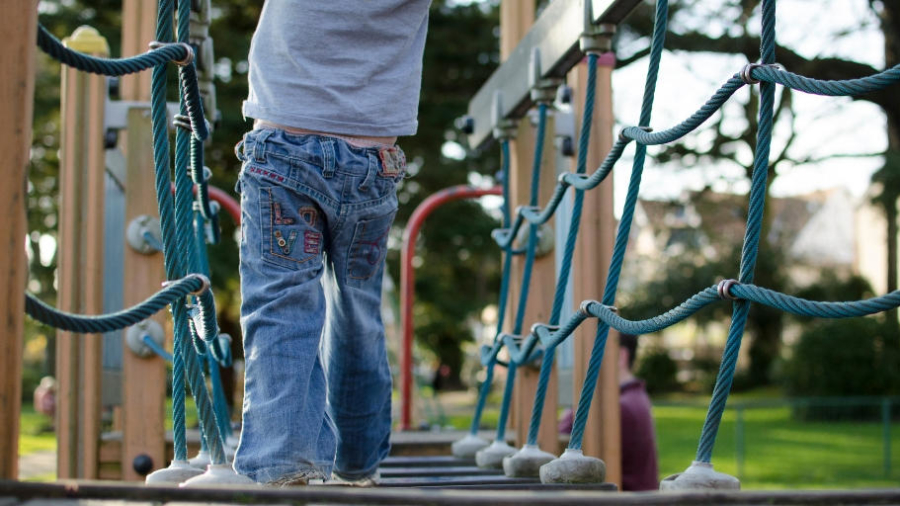
This photo of Rhys was taken at the park one day when he faced his fears and climbed up to the top of this wooden climbing frame.

He had been so scared to do it, and I realised that me standing right by him wasn’t actually helping.  So I backed off a bit.  Gave him the space he needed to take a deep breath and go for it.

Those are the clenched fists and determined face of a boy who achieved something he wasn’t sure he could.

And that is the beauty of outdoor play.

It gives our children the chance to try things.  To have fun.  To explore.  To take risks.  To push themselves.  To develop in so many ways.


Disclaimer: this is a sponsored post with esp play.

How buildings can affect our wellbeing

How the buildings we spend our time in affect our mood and wellbeing

Unless you have a job that involves working outside, chances are you spend a fair bit of your time indoors.

It might be that you spend a lot of your time at home with your baby, or children if you home-school.  Or it might be that your days are mostly spent sitting in front of a computer at the office.

Wherever you spend the bulk of your time, have you ever really thought about how the different buildings we spend our time in affect our mood and sense of wellbeing?

How buildings affect our mood and wellbeing


The simple answer is that our mood really is impacted quite a bit by the buildings that we spend our time in.

All sorts of studies have been carried out that show that buildings and the way they’re decorated can influence both the way we think and the way we behave.


One of the major factors in how buildings make us feel is the amount of natural light that they let in.

Buildings that don’t have that many windows and so don’t let in much natural light have been found to make us feel less motivated and generally feel low.  On the other hand, buildings with plenty of big windows that let in large amounts of natural light make us feel happier and more relaxed.


Rooms full of natural light can feel more spacious too, which has been found to be a good thing for our wellbeing.

A study carried out at the University of Minnesota in 2007 found that rooms with higher ceilings can allow us to think more freely and be more creative.  So if you feel uninspired and stuck in your head then visiting somewhere like a cathedral with lovely high ceilings might help inspiration strike.


The colours we use in our homes and work environments can have a huge impact on our mood too.

If you want to create a calm, peaceful space then blues and greens are a great way to go.

If, on the other hand, you’re looking to feel energised and fired up then reds and oranges are much better.

The thing to keep in mind is that it’s not just the colour on the wall that can affect our mood, the flooring that we have in the building can have a big impact too.

Research has found that buildings that use wood and wooden products in their interior design can help to lower heart rates and blood pressure, as well as help us feel less anxious and stressed.

So installing something like Parador engineered floors in your home can help make it a more relaxing place to spend time in at the end of a busy day.

The beauty of engineered floors is that they’re hard-wearing and designed to be a practical and versatile alternative to hardwood floors.  They also come in a variety of colours that, again, can really change the feel of a room.

Warm shades of brown are a classic option and make us feel relaxed and comfortable.  They’re great if you like to embrace everything hygge and enjoy cosy evenings curled up with a good book.

If you want to feel a bit more energised though then white or lighter coloured wood flooring can create this atmosphere of calm yet energised, like being by the beach.


The things we fill our space with can also have a big influence on our mood and sense of wellbeing.

Having comfy and modern living room furniture can help us feel more relaxed when we settle down to binge watch Netflix at the end of a long day.  And having things that we’ve carefully picked out and that have personal meaning to us in our homes can make a big difference too.

A study by Zeisel et al. found that patients with alzheimers showed reduced levels of anxiety, depression and social withdrawal when they were in private rooms with their own personal objects around them.

So displaying our favourite photos and personal objects can make us feel better than living or working in a blank, impersonal space.

Buildings with plenty of plants and greenery also have a positive affect on us.

Professor Frances Kuo found that apartment buildings in inner-city Chicago that were surrounded by vegetation experienced about half as many crimes as those that had hardly any greenery.  Various studies have also found that having plants in the workplace helps us feel less stressed and increases productivity.


So if you’re looking to move home or redecorate then take some time to really look at different buildings and spaces and think about how the light, colour and furnishings will affect how you feel when you spend time there.


If you’re not able to change your home you can still benefit from the positive impact of buildings on our wellbeing by taking time regularly to visit different places.

Spend time in green spaces as much as possible.  Take a walk through your town and find interesting architecture that interests you and maybe even brings you a sense of awe.  Find a local cafe with warm wooden flooring and a cosy interior design to relax and switch off for a bit after a busy day at work.


why don't we follow instructions

Why don’t we read manuals and follow instructions?

We’ve all been there.

Our brand new kettle, or flat pack cabinet or even dolls house for our child arrives, and with it a big instruction manual.

Some people will crack open that manual and read it all from cover to cover before doing anything else.  Those people are absolutely in the minority though, and possibly have too much time on their hands.

Most of us will have a flick through the manual to get a rough idea of what we need to do and then just dive in.  Possibly dipping back in now and then when things get a bit tricky.

But why is this?  Why don’t we like to read manuals and follow instructions?

Why don't we read manuals and follow instructions_

One of the main reasons we don’t read manuals is that we don’t have time.

Or more likely we don’t want to spend the time it would take to sit down and read a manual properly.  We would rather just get stuck in and see how we get on.

Sometimes this approach works, but so often it doesn’t and we end up wasting more time than if we’d just read the manual in the first place.

A lot of the time we think the manual is going take longer to read than it actually would, because the same instructions are repeated in multiple languages.  If we would just take a minute to open up these multilingual manuals we would realise that the instructions are shorter than we first thought.


Another reason we don’t read manuals is because we think we already know enough to manage by ourselves.

If we’ve had a stereo or microwave before we think we’ll be able to work out how to use a new one without reading the instructions.  A lot of the time with this we’re right, although it does still often end up taking us longer to figure out than if we’d just read the manual.


Our past experiences also make us wary of reading instruction manuals.

So often in the past we’ve tried to make sense of them but they’ve been written so badly that we just give up.  And then the next time we have a new product we decide not to even bother trying with the instructions.

Especially because these days we know we can quite easily find videos online to help us if we get stuck, or we can just call the company’s helpline and let them talk us through it.


What we really need are manuals that are concise and clear, not overly complicated and long-winded.

More and more companies are starting to realise this, and are making quick-read versions of their instructions alongside the full manuals.  This means that we can use those to get started with our new items as quickly as possible, while still having all the detailed information and technical documentation on hand should we need it later.


The thing is we’re all so busy these days, we don’t want to spend valuable time reading an instruction manual.  

But this is one time when it’s worth slowing down a bit and taking the time to at least try to follow instructions properly.  As long as they’re well written, clear and concise then reading them can save us a lot of time and stress down the line.


Do you read manuals and follow the instructions, or do you prefer to just dive in and try to figure it out on your own?


Disclaimer: this is a collaborative post
why we love DIY

The psychology behind why we love D.I.Y

I think it’s safe to say that the UK is a nation of D.I.Yers.

Every bank holiday you’ll find people all over the country getting stuck in to redecorating their living rooms, refitting their kitchens or building flat pack furniture for the bedroom.

But why is this?  What is it about doing it ourselves that we seem to enjoy so much.  Turns out there is some interesting psychology behind why we love to D.I.Y instead of paying someone to do these home improvements for us.

The psychology behind why we love D.I.Y


When we look at our homes and see big jobs that need doing, like repainting, changing the kitchen units or putting up new fencing in the garden, why do we decide to do it ourselves?

With these kinds of things, and especially with really big jobs like extensions and loft conversions, it would make more sense to hire professionals to do the work.  It would, in theory at least, be done much more quickly and efficiently.  And you would know that the work was done safely and to a good standard.  With sites like price your job it’s really easy to find tradespeople too.


So why do we choose the D.I.Y option so often?

A lot of the time it comes down to the fact that it can be a lot cheaper to do it ourselves.

Other times though, it goes a bit deeper than that.


A paper written by Moisio, Arnould and Gentry found that our lifestyle and what we do for a living can impact our desire to do D.I.Y jobs at home.

For people who work in high-powered jobs where they tend to sit at a desk all day, doing home improvements at the weekends is a way of feeling more connected with their inner craftsman who likes to get their hands dirty.

On the other hand, someone who does a more hands-on job earning less money might use D.I.Y as a way of reinforcing their identity as someone who cares for and provides for their family.  Giving them the home they want without having to spend a fortune to get it.


What’s also interesting to know is that we put more value on things we’ve built ourselves.

Even if it’s just a piece of flat pack furniture that we assemble at home.  We tend to have more attachment to these items and feel they’re worth more than pre-built pieces.  The same goes for decorating around the house.

We take more pride and see more value in rooms that we’ve taken the time and effort to paint or wallpaper.


The thing is, according to a survey or around 2000 people, almost half of the D.I.Y jobs we start don’t get finished.  And 25% of the time that’s because we don’t have the expertise needed to complete the job.

So before you get caught up in the excitement of home improvements, take a few minutes to decide if it’s really something you can do yourself or if you’d be better off calling in the experts.

Do you like doing D.I.Y jobs at home?  Do you have any tips for making a success of it?


Disclaimer: this is a collaborative post

Power poses to boost children's confidence

The power poses that can boost confidence in our children

If you have children who are often anxious and who lack in confidence then there’s a trick you can try to help them feel braver and more confident.

What’s really great about it is you only need a few minutes to try it.

All you have to do is get your child to stand in an open, powerful stance for 2 minutes.  These power poses have been found to influence our hormones so that we’re less reactive to stress and get a boost of testosterone which makes us feel more confident.

The power poses that can boost confidence in our children


This idea of power poses was made popular by social psychologist Amy Cuddy in a TED talk in 2012.

She discussed how she and her colleagues had found that holding our bodies in a way that opens them up instead of curling in on ourselves can have a big effect on how confident we feel.

In her talk she mentioned that standing in a power pose before an interview can reduce our anxiety and make us feel more confident.  Doing it before the interview starts means that we walk into the room feeling more powerful and much less nervous.  It’s not really about standing in a certain way so that others view us as more confident, it’s about doing it to change the way we feel about ourselves.


Now, there have been various studies carried out since Cuddy gave this talk that seem to dispute her findings.

But I think there’s still something in it, even if it’s more of a placebo effect than an actual biological change brought on by standing in these power poses.


For children who are nervous about going in to school or scared about starting a new club then getting them to stand in one of these power poses for 2 minutes before you go could really help them.

It’s like how faking a smile can actually make us feel happier.

If we stand with our bodies in a big, confident pose then we’ll start to believe that we are genuinely more confident.


So if you’d like to try this with your children, here are 3 different power poses they can try:


The Wonder Woman pose

For this pose your child should stand strong with their feet a bit wider than hip width apart.

They then need to put both hands on their hips.  If they want to they can make fists, or just put their hands straight on their hips.

Power pose wonder woman post boost confidence


The superhero pose

Get your child to plant their feet firmly about hip width apart.

They then need to make a fist with one hand and then put it up in the air, like a superhero about to fly off to rescue someone.

Power pose superhero pose boost confidence


The performer pose

For this pose your child needs to stand strong with feet a bit wider than hip distance apart.

Then put their arms up in the air in a ‘V’ shape, like a performer in front of the crowd at the end of an amazing show or an athlete celebrating winning a race.

Power poses help boost confidence


The key thing with all of the poses is for your child to stand straight and tall, and take up as much space as possible.

When we make ourselves big and visible (even when we do it private) we feel more powerful and, as a result, less anxious.

A big part of this is that it’s not about changing how other people see us and what they think of us.

It’s about changing how we feel about ourselves.

A study by Binel et al 2012 found that people who stood in a power pose like the ones mentioned above were more likely to rate themselves as feeling confident than people who stood in a smaller, ‘doubtful posture’.  And it does make sense.  If we stand in a hunched position with our arms crossed in front of our bodies we tend to feel smaller too.

Opening up our bodies and standing tall does make us feel more in control and ready for action.


So next time your child is anxious or scared about something, try getting them to stand in one of these poses for a few minutes and see if it helps them feel more confident.


This post is linked up with KCACOLS.

ways to get people to like you more

5 psychology-backed ways to get people to like you more

Life as a parent is so different from life before you have children.

If you’re the first in your friendship group to have babies it can sometimes make things hard, and chances are you’ll want to branch out and meet some new mum friends.  That can be easier said than done though and it can be quite scary approaching people and hoping they’ll be friendly and want to chat.

With that in mind, here are 5 psychology-backed things you can try to get people to like you more:

5 psychology-backed ways to make people like you more


1. Be there

I don’t mean this in the deeper sense of being there for someone in their time of need.  Although that will naturally help them like you more.

In this instance though, I mean literally be there.  Show up and be a familiar face in their lives.  Go along to baby group regularly or get to the school gates a bit early every afternoon.

Studies have found that, due to the mere exposure effect, people tend to like other people that they’ve seen before more than people who are completely new to them.  This applies even if we don’t actually interact with these people.  And the more we see people the more we end up liking them.


2. Act as if you already like people

Once you get chatting to people act as if you like them already.

There is an interesting psychological phenomenon called ‘reciprocity of liking’ which basically causes us to like someone if we think they like us.

Researchers at the University of Waterloo and the University of Manitoba found that we act more warmly toward people if we expect them to accept and like us.  This then increases the chances that they will actually like us.

So basically, if you act as if you already like people when you first chat with them then chances are they’ll like you back.


3. Find a common enemy

One psychology-backed way to bring people closer together is to give them a common enemy.

A study by Weaver and Bosson, 2011 found that people who shared a dislike of the same person with a stranger stated that they felt closer to that stranger and felt that they knew them better.

So if you want the other parents at the school gate to feel closer to you then start up a conversation about how bad the communication is with the school, or how rammed the carpark is every afternoon.  If you can find this kind of common enemy you’ll start to form a strong sense of shared identity with the other parents.


4. Show your imperfections

I think most of us like other people to think we have it all together, but don’t worry about trying to be too perfect all the time.

Research has found that we tend to like people more when they show that they’re human, that they’re not as perfect as they seem at first and that they make mistakes too.  This is known as the pratfall effect.

So when you arrive at babygroup on time and looking relatively put together, make sure you then tell the other parents that you put the baby’s nappy on the wrong way round last night.  Or that you put the keys in the fridge the other day.  Revealing a mistake you’ve made or letting people know you have struggles too will make them feel warmer towards you than if they think you have it all perfectly together.


5. Ask them to do you a favour

This last one is possibly the most interesting.

It makes sense that we like people who do us favours and help us out, but it’s a bit more surprising to know that asking someone for a favour also makes them like you more.

For a long time psychologists believed that this was down to cognitive dissonance.  They thought that it was mainly due to us thinking that we must like someone if we’re willing to do them a favour.

There might be more to it than that though.

A study carried out in 2016 found that when we’re asked to do a favour for someone by a third party, we don’t like the person as much as we do if they ask us for the favour themselves.  So it’s the act of actually asking for the favour that makes us like someone.  Them asking suggests that they have a desire to be closer to us, or that they feel close enough to us already to ask.  We then pick up on this and want to be closer to them too.

So, ask someone to watch your baby for you at group while you go to the toilet.  Or ask another parent at school to text you the words that the children need to learn for their spellings that week.  The person you ask will be flattered that you’ve asked them and will warm to you more quickly.


Venturing out to new places and meeting new people can be really daunting.

But hopefully with these tips in mind getting people to warm to you and want to be friends should be that much easier.

Get children to listen without shouting

How to get your child to listen to you

I have a feeling that every parent at some point has felt that all they do is nag or shout at their children before they seem to listen and do what they’re being asked to do.  The thing is, so often the answer to the problem involves looking at our own actions and behaviours.

It’s so easy to get frustrated and think ‘my child never listens to me’, but the best way to help the situation is to stop and think about how clearly we’re actually communicating with them.

Here are some things we can do to get our children to listen, without ending up shouting.

How to get your child to listen to you


Think before you speak

You can’t expect your children to listen to you if you randomly shout instructions to them from another room.

So before you speak make sure you’re standing close to them, or at the very least are in the same room.  Then make sure that you have their attention by using their name and speak clearly while looking directly at them.


Keep it simple

When you need your child to do something, keep your instructions as simple as possible.

Young children especially can find it hard to remember 2-stage requests, so stick to asking them to do one thing at a time.  So if  you need your young child to put their shoes on, instead of giving a long-winded speech about it, stick with a simple “shoes on please!”.

Older children may well start to tune you out if you ramble on too much about them needing to do something.  So again, keep it short and snappy when you ask them to do something.


Focus on what you DO want

This is a piece of advice my sister gave me years ago and it’s brilliant.

Children often focus on and remember the last part of what you say to them.  So if you say “please don’t run off ahead of me”, what they might actually hear and focus on are the words “run off ahead of me”, and so off they’ll go.

What you need to be doing is tell them what you do want them to do, not what you don’t want them to do.

So in this example you’re much better off saying “please walk nicely by my side” or “let’s skip along together”.  You’re basically looking at switching from negative “don’t do that” instructions to more positive, “do this please” versions.

How to get your child to listen to you (1)


Put yourself in your child’s position

Again this is about slowing down a bit and thinking before asking your child to do something.

If they’re in the middle of an activity, is it really fair to expect them to stop it immediately just because you say so?  How would you feel if someone came and demanded you do something, out of the blue, while you’re in the middle of doing something?

Try to give a bit of warning whenever you can that something will be happening or if they’ll need to do something.

So let them know 10 minutes before dinner is ready that they only have that much time left to play before they’ll need to stop and come to the table.

Now, this can also be applied in a way to situations like children running off in the park or messing around in the library.  As parents we need to stop and put ourselves in their shoes a bit.  To remember that they don’t necessarily know how to behave in these situations.  So we need to talk to them in advance as much as we can, to set our expectations for how they need to behave.


Explain things rather than just give demands

Following on from the last point, we need to remember that children don’t know everything we know, and they see the world differently from us a lot of the time.

They may not understand why we’re asking them to do certain things, so it makes it easier for them to go along with it if we explain the why behind our requests.

If we want our children to tidy up their toys it’s helpful to explain to them that they might get lost or broken if they’re left out, that it makes it easier for them to find them next time they want to play if they’re put away nicely and that other people want to use the space and it’s nice to consider their needs and feelings.

Give them options

Children often feel that they have no control over what happens in their day to day lives, and sometimes saying ‘no’ and refusing to do what we ask is simply them trying to assert some control.

One way around this is to give them choices, to help them feel that they have a say in various things that happen.  The key here though, is to only offer a couple of choices and make sure you’re happy with either option.

So, “put this top on, we need to go” becomes “it’s time to get dressed now, would you like to wear the red top or the yellow one?”

“Brush your teeth and put your shoes on” changes to “would you like to do your teeth first or put your shoes on first?”

You can also use options like this to give consequences to your child’s actions.

So, rather than getting frustrated when your toddler won’t listen and hold your hand while walking, you give them option of holding your hand or being carried.  If they won’t put a hat on in the park then you tell them that they either wear the hat or you both leave the park.  It’s their choice.

Just make sure you follow through with any consequences you talk about.


Acknowledge when they do listen

When your children do listen and cooperate with you, make a point of acknowledging it.

Give them a big smile and a hug and thank them for doing as they were asked.  When behaviour is acknowledged it’s more likely to be repeated in the future.


Not all of these things will work with all children, all of the time. 

But that’s true of most things when it comes to parenting in my experience!

Hopefully though with a bit of time and consistency, you’ll find something in here that works for you and your family to get your children to listen without anyone nagging or shouting.