7-ways-work-home-parents-productive

7 ways for work at home parents to have a more productive day

Working from home can seem like a bit of a dream, until you try it and realise how hard it can be to actually be productive and get your work done outside of the traditional office environment.  Throw a child or two into the mix and it gets even harder.

So for anyone out there who might be struggling, here are 7 ways for work at home mums and dads to have a more productive day.

7 ways for work at home parents to have a more productive day

Get a change of scenery.

Organisational psychologist Ron Friedman has found that a change in scenery can boost productivity.  He makes a really good point that “no single environment is effective for every task”.  So if you feel yourself flagging sitting at your desk/kitchen table/makeshift office at home, then try heading out to a local cafe for a bit to work there instead.

Even better, work out what tasks you can work on that don’t require internet access and go outside for some of your working day.  Friedman has noted that studies show that going outdoors can ‘replenish our mental resources’, which is great news for our productivity.

If you have your children home with you:

Take a notebook to the park with you to brainstorm ideas while your child plays.  Or take your laptop to the soft play centre and make use of their wifi while your little one goes exploring.


Get a buddy.

Team up with a friend who also works from home.  You can use each other to stay accountable for the things you need to get done.  Either daily or weekly, let each other know what your goals are and then periodically check in with each other to make sure you’re making progress.

This is also a great way to make sure you’re getting some human/adult conversation to stop you feeling isolated and going a bit stir crazy.  Having someone to bounce ideas can also really help you to stay productive.  If you’re stalling on a piece of work because you’re not sure of the best way to handle it, having a buddy to talk it over with can help you move forward much more quickly than trying to figure it all out alone.

If you have your children home with you:

Try and find another work at home parent to buddy up with.  They’ll have a better understanding of what you’re dealing with, trying to juggle a child and work.  You might even be able to set up an arrangement where you look after each other’s children for a few hours each week to allow the other person some completely child-free time to work.


Get dressed.

Dr Ben Dattner from the faculty of psychology at New York University, says that “sometimes getting dressed in business attire can make people feel like they’re more connected”.  So even if you know you won’t be leaving the house, don’t be tempted to just stay in your pyjamas all day.  You’ll be far more productive if you take a few minutes to get dressed properly.

If you have your children home with you:

If your children are still little, and you’re not at the stage yet of needing to get them dressed ready for school, then it can be so tempting to have days when you all just stay in your pyjamas.  But in order to be productive and get your work done it really is worth getting everyone up and dressed properly.  Save the pj days for the weekends.


Get your noise levels just right.

Take a bit of time to work out what kind of noise levels work for you.  As a general rule, high noise levels reduce our ability to process information and think creatively, and listening to conversations that start and stop can be really bad for productivity.  So think carefully before putting daytime tv on as background noise while you work!

If you’re going to be doing repetitive tasks then having some music on in the background can be a good way to stay motivated and can also reduce stress.  But if you need to really focus on what you’re doing then avoid music with lyrics because this can affect your concentration.  In fact, complete silence is the best option if you really need to concentrate on the task at hand.

On the flip side of this, if your work requires you to be more creative then low levels of background noise can help you to get the job done.  If I’m working on a blog post I quite often like to use coffitivity to give me some background noise as if I’m working in a coffee shop, which really works for me.

If you have children at home with you:

Having little ones around makes it really quite tricky to control the noises that are around you when you’re trying to work!  I think most of us struggle to concentrate with Peppa Pig on the tv and constant shouts and cries demanding our attention.

What you can do is try and work your tasks around the noise.  So save the jobs that require absolute concentration for naptime, or for the evenings when the children are in bed.  Or if it works better for you, get up earlier in the morning to crack on with them.  Then when you can buy yourself 20 minutes worktime courtesy of cbeebies then use that time to do the jobs that require a little less focused brain power.


Get focused.

So often we think we’re being productive when we multitask, but switching from one task to another all day long actually makes us so much less productive.  Our brains can only focus on one thing at a time, so trying to multitask just reduces our efficiency and performance.  Our brains don’t have the capacity to carry out both tasks successfully.

One of the best things you can do for your productivity is to batch your work.  Which basically means, do all ‘like’ tasks together, in one hit, rather than jumping from one task to another.  So if you’re a blogger, you might do all the photography you need to do for that week’s blog posts in one go.  Then do all the writing.  Then schedule all your tweets in one go.  This kind of focused work is so much more productive.

If you have children at home with you:

As you’re more likely to get side tracked when you have your children around, it might work to take this batching idea to a different level and tackle different tasks on different days.  So on Mondays you might focus on photography.  So you have everything set up and the camera ready so whenever you get the chance you can jump in and get a few shots.  Then on Tuesdays you might work just on writing content.  And so on for the whole week.


Get ready.

I have about 2 hours every morning to work at the moment, while Nerys is at school, and I find I’m much more productive in that time if I have everything set up and ready for when I come home from the school run.

Planning what needs to be done, and writing a to-do list, the night before means I can hit the ground running.  Otherwise I find I faff around a bit, working out what I need to do, and wasting precious time.

If you have children at home with you:

Create a master to-do list of everything you need to get done.  Then each evening write a to-do list for the next day, with about 5 tasks on it that you need to focus on.  Work out what windows of time you’ll have to fit your work in and then plan which tasks you’ll tackle when.

Knowing ahead of time what you need to be doing will help you to jump straight in as soon as you get the chance, saving valuable time.


Get your frogs eaten first.

If you’ve ever looked into productivity, then chances are you’ve come across this idea before.  There is a quote, apparently from Mark Twain, that goes along the lines of ‘eat a live frog first thing in the morning and nothing worse will happen to you the rest of the day’.  So basically, you should do the work task that you’re dreading the most, first.  If you keep putting it off it will nag away at you, distracting you and making you less productive.  If you just crack on with it, and get it done first thing then it’s out of the way, and your mind is left clear to focus on the other jobs you need to get done.

If you have children at home with you:

Plan an activity to occupy your little one at the start of the day, so you can get on with eating that frog.  Depending on how long you need, you can pop your baby in a jumperoo or under their baby gym to entertain themselves for a short while.  For toddlers you can set up a simple art/craft activity so they can ‘work’ alongside you.  And a bit of tv or tablet time really won’t do them any harm in my opinion, and can be a good fallback option if you need some quiet to get that most dreaded task completed.


I really hope some of these tips might help you, if you’re a mum or dad trying to juggle working from home with looking after a baby or young child. 

Do you do any of these already?  Or do you have another tip that helps with productivity when you work from home?  Please do leave me a comment and let me know!


This post has been linked up to the list linky with you baby me mummy.

be-brave-try-something-new

New year, new hobby – how to be brave enough to try something new

I left the education system back in 2003, but even in the 11 years between then and Rhys starting school in 2014 I still felt caught in the rhythm of the school year.

September has always felt like a new year to me.  A time for fresh starts.  A time to try something new.

If you feel the same way, then you might be thinking about stepping out of your comfort zone and trying a new hobby.  If you’re really like me though, you might also be feeling really nervous about it.

Trying something new can be really intimidating, but there is so much to potentially be gained by starting a new hobby or trying out a new activity.

So here are some things you can try to help you feel brave enough to give something new a try.

how-be-brave-try-something-new

Get prepared

For me personally, I feel much better about going in to a new situation if I’m as prepared as I possibly can be for it.

So if, for example, you’ve decided that this year you are going to start going to a fitness class at the gym, think about what you can do before you go to feel as prepared as possible.

Do some research into what the class will be like, maybe see if there are any youtube videos that might show you one or two of the exercises that might be in the class.  Do a trial run of your route to the gym, so you know exactly where you’re going and how long it’ll take to get there.  Make sure you know where you’re going to park, and if you have to pay for parking make sure you have change ready.

You could even have a chat with the staff at the gym and ask for a quick tour, so you know on the day where the changing rooms are, how the lockers work, and which room the class will be in.

Chances are you’ll feel much braver if you know where you’re going and what you’ll be doing.


Focus on the benefits

If the nerves are still kicking in, then stop and think about why you actually want to pick up a new hobby.

Sticking with the fitness class theme, remind yourself of what you will get from going.  Focus on how you will feel fitter and stronger if you do it.

Or say you have decided to go along to a book group; instead of focusing on the things about it that are scary, focus on the fact that it will encourage you to read more.  You’ll discover books you might not otherwise have come across.  And you might make some really great new friends there as you discuss what you’ve all been reading.


Be gentle with yourself

Whatever hobby you might have chosen, keep in mind that you are a beginner.  Don’t feel disheartened if you don’t pick it up straight away, or if you’re not as good as other people in the class that you’ve signed up for.  Remember that other people in that spin class have most likely been going every week for months, if not years.  Don’t compare yourself to them!

Take your time and just allow yourself to be a beginner.

If you don’t ‘get’ something straight away, be kind to yourself.  Don’t fall into the ‘I’m rubbish, what’s the point’ trap and end up quitting straight away.  Give yourself a break, keep trying, do some more research, or talk to someone else who does the thing you’re trying to do.

They’ll either reassure you that everyone struggles to start with, or give you some really useful pointers to get you on your way to feeling great about your new hobby.


There you have it, some practical ways to feel brave enough to try a new hobby.  Hopefully you’re feeling bolder now and it’s given you a little push to try something new.

So tell me, what new hobby are you planning on trying out next?

Cuddle Fairy
benefits-yoga-children

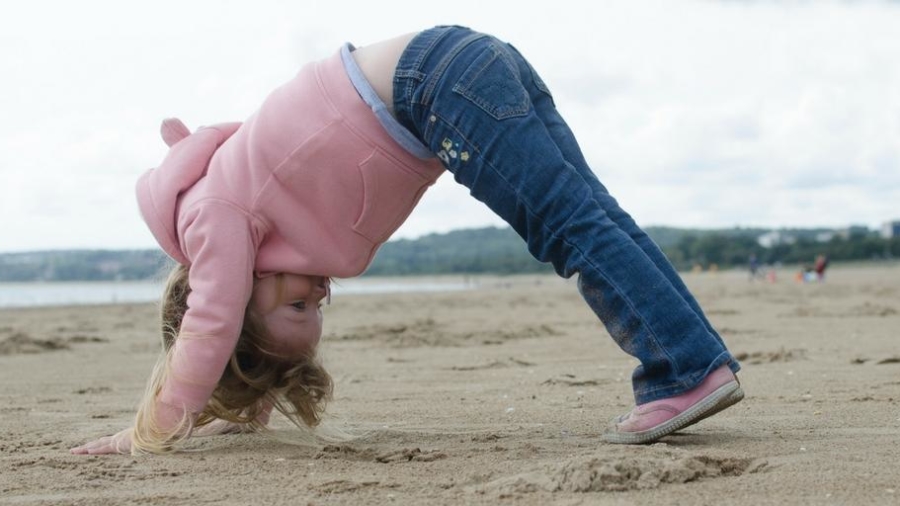
10 benefits of yoga for children

If you’ve visited this blog in the last few months you might have seen me mention yoga a few times.

Rhys and I went along to a family yoga session in the summer holidays, that we both really enjoyed.  And we’ve been reviewing a fantastic book called ‘Kids yoga’, which is a great introduction to yoga for children.

I’m realising more and more that our family would benefit from working some yoga into our daily routine.

If you’re wondering if it might be a good idea for you and your family too, here are 10 benefits of yoga for children, to maybe convince you to give it a try.

10 benefits of yoga for children

1. It can help their focus and concentration

Yoga has been shown to improve our memories, attention span, and our concentration.  So fitting a bit of yoga in each morning can be a great way to set our children up for a day at school.


2. It’s calming

Children are always learning and experiencing new things, and this can quite get a bit much at times, leaving them feeling anxious or stressed.  Yoga can really  help as it creates a real sense of calm, which then leads to them feeling less anxious and stressed.


3. It maintains their flexibility

Young children are naturally flexible, and doing yoga helps them to maintain this as they grow.


4. It can help them to sleep better

Sleep is so important for children, and yoga can be brilliant for helping them get more and better quality sleep each night.

A study of a group of students found that after doing yoga for 45 minutes before bed for 2 months, they feel asleep around 15 minutes faster and had more REM sleep than a group who didn’t do any yoga.


5. It improves balance

Practising poses like tree pose can be great for improving children’s balance.  This can be great for boosting their confidence in other physical activities, like getting to the top of the climbing frame at the park, or learning how to ride a bike.


6. It lays the foundations for a healthier life

If your children do any kind of physical activity when they’re young, they’ll be highly likely to carry on being physically active as they get older.  Yoga is especially good for laying these foundations as children get so much out of it, both physically and mentally.


7. It teaches them persistence

No one doing yoga for the first time will be able to do every pose.  But with time and regular practice we get stronger, and more flexible, and our balance improves, and suddenly we can do the poses that were so hard for us when we first started.

This is a great lesson for children to learn.  That no one is amazing at everything, we all learn at our own pace, and that some things take a lot of persistence to master.


8. It promotes kindness

A lot of physical activity seems to be about competition, about knocking down the people you’re playing against.  Yoga on the other hand is the complete opposite.  There are no winners in yoga, so there’s no competition.

Instead of knocking other people down, it teaches our children to build them up.  It teaches them to be patient, to be kind and to be accepting and empathetic with both themselves and with other people.


9. It teaches mindfulness

The world we live in today can be so fast paced and chaotic, no wonder mindfulness is becoming a bit of a buzz word.

Taking time every day to just stop, and focus on the moment we’re in can really bring us back to a sense of calm.  Yoga is brilliant for this, as it asks us to focus on the way our bodies feel, and on the breaths that we’re taking.


10. It supports their mental health

Yoga is great for children’s physical health, but it is also great for their mental health.

It releases those wonderful stress-reducing hormones.  It teaches them to love and accept themselves, and other people, as they are.  It gives them tools to relax and to find calm in a chaotic world.


On top of these ten benefits that children get from yoga, there is also the simple fact that they have fun doing it.

Nerys was trying out different poses from our kids yoga book yesterday, and having such a great time doing it.

When there are so many benefits, and children can have so much fun with it, I’m not sure there are really any good reasons for not getting our children doing yoga.


You Baby Me Mummy
5-reasons-you're-always-late-what-you-can-do-about-it

5 reasons you’re always late and what you can do about it

I had the best of intentions.  I really did.  The night before the first day back at school I got everything ready.

The school bags were packed, uniforms were laid out ready to be put on in the morning, I was all set.

We were going to head out the door in the morning with plenty of time to spare so we would arrive at school feeling nice and calm.

Yet somehow it just didn’t happen.  Despite all my planning and good intentions, we still ended up rushing towards the school gates to get there just in the nick of time.  This happens more than I care to admit.  And I’m really ready to try and tackle the issue head on.

So I’ve done a bit of research and found 5 reasons people are always late, and crucially, what we can do about it.

5 reasons you're always late and what you can do about it


1. Your internal clock isn’t as accurate as you think it is

We all tend to think that we have a pretty good idea of how much time is passing, but you might not be as good at it as you think.

I remember back when I was in school, the teacher asked us all to put our heads down on our desks and close our eyes.  Then she told us to wait until we thought a minute had passed, and then put our hands in the air.

From what I remember, very few people put their hands up at the 60 second mark.  Some had their hands up really quickly, while others were way over a minute.

All of which goes to show that we can’t always trust our intuition about how much time has passed.  You might think that you were only upstairs doing your hair and make up for five minutes, but actually over ten minutes has gone by and now you’re running late.


What to do about it.

You can work to retrain your brain so that you can estimate time better.  Play games with yourself to see if you can guess how much time has passed while you’ve made a cup of coffee, or had a shower.  Over time you should find that you’re able to estimate time much more reliably.

In the meantime, simply make more of an effort to check the clock as you get ready in the morning, so you know you’re keeping track of how much time you actually have left before you need to leave.


2. You don’t like the idea of being early

Some people love being early for things.  It makes them feel calm and in control of situations.  Other people though, find the idea of being early hard to cope with.

One reason behind this is that we feel that we loose valuable time by being early.  Leaving the house earlier than we ‘have’ to means stopping doing the things we want to be getting done at home.  And then we arrive at our destination early, and have nothing productive to do there.

The other main reason behind a dislike of being early is that it makes us feel self-conscious and uneasy.  We feel like people are watching us, wondering why we’re so early, why we’re just lurking in our cars or in the street outside the school.


What to do about it.

The main way to get around this reason for being late is to change the way we think about the time we spend waiting when we get somewhere early.

You want to move away from thinking about it as wasted time, by planning something productive to do in that time.  So for me that might be planning to fit in some Instagram time while I’m waiting outside the school gates to pick the children up.  You could plan to use the time to do your weekly food shop on an app on your phone.  If you’re with the children before school then you could use the spare few minutes to go over the spellings they are learning, or practice some times tables with them.

Making that spare time feel useful and productive will help take the sting out of being early.  And being busy will help stop us being so conscious of what other people might be thinking about us.


3. You plan on being on time

This follows on nicely from the last reason why some people are always late.

Most of us don’t plan on arriving late to places, but if we feel uncomfortable with being early then what we end up doing is planning to get there right on time.  Now, this really rings true for me.  I know that the drive to school takes around ten minutes, so I’ll often end up heading out the door ten minutes before I need to be at the school gates to pick the children up.

The huge problem with this is that it doesn’t allow any margin at all for delays.

So if the timing is off and I hit red lights at both sets of traffic lights,  then that ten minutes is suddenly not quite enough time.  Or if I have to dash back into the house for something that I’ve forgotten, it might only take a minute or two, but that’s a big chunk of the ten minutes I allowed to get to school!


What to do about it.

This one is pretty simple at least.  Stop planning on getting to places on time!  Plan to get to where you need to be ten minutes early.  So when you inevitably hit that third red light, it won’t end up making you late.


what to do if you're always late


4. You’re trying to do too much at once

I think multitasking is something we’re all pretty guilty of these days.  We scroll through Facebook at the same time as watching TV.  There are ten different tabs open on our computers and we flit between them all, checking our emails, reading the news, updating twitter.  We think this is making us more productive, but it’s really not.

The truth is we would all be much more productive if we just focused on one task at a time.

One of the problems with multitasking is that it makes it harder for us to have metacognition.  Which is just a fancy way of saying, it makes us less aware of what we’re doing.  So when we rush around in the mornings, doing ten things at once, we lose track of time really easily and end up being late.


What to do about it.

The best thing to do if you often find yourself losing track of time is to set an alarm to go off five or ten minutes before you need to head out the door.

So you can go ahead and juggle drinking your coffee and putting a load of washing on, while finding your children’s shoes and putting your make up on, safe in the knowledge that the alarm will go off and tell it’s time to drop any unnecessary tasks and get out the door.


5. You always do one last thing

As in, you always try and fit in ‘one last thing’ before you leave the house.

You think you have a few minutes to spare, so you quickly try and put a load of washing on.  Or go through the mail that’s just been delivered.  Or run an armful of the children’s toys back up to their bedroom.

These jobs are never quite as quick as we think they’ll be, and so we end up stressed and rushing out the door after we’ve done them.


What to do about it.

Just walk out the door.

It’s that simple.  If you are pretty much ready to leave, and feel the urge to go and do ‘one last thing’ before you head out the door, tell yourself ‘no’.  At that moment, just get your things and get out of the house.  Whatever the little job is, it can wait until you get home again later.


So there you have it.

Five reasons people are always late, and ways to hopefully try and break the habit and start being on time (or early even!).

I think for me, there are several reasons behind why I’m often late.  It’s a real mix of pretty much everything on this list, so I really have some work to do.  But I’m actually feeling quite hopeful that with some work I will be able to make some changes.

Are you often late for things?  Or are you the complete opposite and find yourself always really early for everything?

Please do let me know in the comments, especially if you have any other tips or tricks to break the lateness habit!


Cuddle Fairy
things-try-anxiety-child-school

6 things to try to help with anxiety at school

My husband and I are both quite anxious people.  So it hasn’t come as a big surprise to us that our children both experience a fair bit of anxiety over different things.

One big cause of anxiety for Rhys, and lots of other children out there, is school.

Now, Rhys likes school.  He is bright and he is an enthusiastic learner.  But there are still lots of things about going to school that make him anxious.

He is a really sensitive child, and worries about getting things wrong at school.  He worries about getting into trouble, as he has so much energy and is still learning how to channel it productively.  He worries about things that, honestly, I didn’t realise he might be worried about.

Being anxious myself though, I understand how all-consuming those worries can be.

If you have an anxious child too, then these strategies might help.

things-try-help-anxiety-school-child

Acknowledge and name their feelings

First of all, don’t just dismiss their anxiety.  It can be so tempting to try and placate them, and say things like ‘don’t worry about that’ and ‘it’ll all be ok’.  And while we say these things with the best of intentions, they don’t actually help.  No one wants to feel scared or anxious, but we can’t help it, and being told not to worry about the thing we’re worrying about can often just make us feel worse.  Because we feel that our worries are unfounded, and that there’s something wrong with us because we’re feeling anxious.

Instead, try to validate your child’s feelings.

Let them know that you understand how they’re feeling, by saying things like “I can tell that you’re feeling scared/nervous/uncertain” or “it seems like maybe you’re anxious about such and such”.


Encourage your child to talk to you

The more you can get your child to talk to you about how they’re feeling and what is making them anxious the better.  So if they come to you and tell you they feel nervous, encourage them to open up and tell you more about it by saying, “yes, I can tell you’re feeling a bit nervous, what is it that you’re worried about?”

Try and be mindful of the type of questions you ask though, and steer clear of leading questions if you can.

So if there’s a school trip coming up that you know they’re probably worried about, don’t ask them “are you scared about going to …” or “are you feeling nervous about getting on the bus to go to …”.   Instead try to ask more open questions like “how are you feeling about the school trip to …”


Teach them some mindfulness techniques

Speaking of being mindful, teaching your child some mindfulness techniques can be a really good idea to help them cope with anxiety.

The simplest way to start with mindfulness is to get them to stop what they’re doing, stand or sit still and start paying attention to everything around them.  Ask them to focus on the way the ground feels beneath their feet, or the way the wind is making the leaves in the trees rustle.  You can give them a small item to hold in their hands, like a pebble from the beach, and ask them to pay attention to the weight of it in their hands, and the smoothness of its surface as they run their fingers over it.

Shifting their focus onto the world around them can really help get them out of their heads, which in turn can help them to feel less anxious.


Remove the stigma

Children might feel that they are the only ones who feel anxious about things, which then makes them even more worried about it.  They might worry that people will think less of them because of their anxiety.

Something that might really help is to remove the stigma around anxiety for your child.

Let them know that anxiety can be a good thing, it helps to keep us alert and can protect us from harm.  It’s also a great idea to make sure they understand that pretty much everyone experiences anxiety at times.


Take care of them

A nervous child might feel sick, and lose their appetite, but try to get them to keep eating.  And make sure they’re getting as much quality sleep as possible.

Do some gentle exercise with them, like taking a stroll after tea or doing some yoga together.  Try to get them to eat foods that are rich in omega3 fatty acids, and for older children try and reduce the amount of caffeine they’re consuming, as it can make anxiety worse as it can trigger our fight or flight response.


Create a checklist

For some children having a routine or checklist to work through when they start to feel anxious can be really helpful.

Using the logical left side of the brain to work their way methodically through the checklist can help quieten the emotional right side of the brain, so very act of using the list can help calm them down.

The list will probably be slightly different for each child, but could include things like taking some deep breaths, using some mindfulness techniques and assessing the current situation to reassure themselves that there is no real present danger.


I hope that using a combination of these things will help us all get through the next school year with a bit less stress and worry.

Do you have an anxious child?  Do you do any of these things to help them, or is there something else that you do that works for you and your family?


Cuddle Fairy
Keep Calm and Carry On Linking Sunday
psychology-sharing

The psychology of sharing, and why I don’t force my children to do it

As parents we’re responsible for teaching our children all sorts of skills and behaviours to try and equip them to deal with the big wide world out there.

One of the things that can be particularly tricky to teach them is how to share.

My view on it is that I will teach my children that it is nice to share, and I will encourage them to do it but, in most circumstances, I won’t force them to do it.

The psychology of sharing


A fair bit of research has been carried out investigating the psychology of sharing, and what is interesting is that studies have found that young children actually enjoy sharing, but only if it’s their choice and they’re not being forced to do it.

One study in particular, by Wu et. al involved groups of 3 and 5 year old children at a preschool in China sharing stickers with the other children.  One group shared their stickers voluntarily, while the other group shared theirs because they felt obligated to do it.

The study found that children in the second group shared more than those in the group who weren’t obligated to do so.

Which isn’t a huge surprise.

But what is interesting is that those who shared because they felt they had to didn’t feel happy about it.  Whereas the children who gave their stickers away voluntarily felt happier than when they kept them for themselves.

Wu explains that, “it seems that the motivation to give does count, and it also suggests that it is unrealistic to expect a very young child to share under pressure and be happy about it!”

Another study involving young children and stickers was written up by Nadia Chernyak and Tamar Kushnir in Psychological Science, and reported that children who make a difficult choice to share their stickers once were more likely to share again in the future.

So it seems that giving children the chance to choose to share makes them happier and also makes it more likely that they will continue to share in the future.

This is in stark contrast to previous findings that children who were rewarded for sharing can end up seeing themselves as people who don’t like to share.  Because they had to be rewarded for sharing, rather than it being something they do just because they want to, they don’t see themselves as ‘sharers’ and aren’t as likely to share things in the future.

The way I see it, after reading this research and just from my own gut feelings about the matter, forcing children to share really isn’t the way to go.

Of course, it’s not as clear cut as the title of this post suggests.

I won’t let my child claim the toy kitchen at playgroup as ‘theirs’ and not allow any other child to play with it.  That’s not on.  It’s not their toy, and just because they got to it first doesn’t mean they get to hog it for the whole play session.

I will sit and explain this to my child and I will expect them to let the other child play alongside them.

If we’re at home though, and Rhys is playing with one of his lego playsets, I won’t force him to share it with his sister.  That toy is his.  He is working his way through the instructions in a careful, methodical way that his 3 year old sister can’t quite grasp yet.  So I get that he doesn’t want her interfering.

If we’re outside school and Rhys has a small packet of sweets, I won’t make him give one to all his friends.  I might suggest that it might be nice if he offers them around, but I won’t make him do it.

What’s interesting though, is that generally he will do so anyway, of his own free will.  As the studies I mentioned before found, he’s realised that sharing makes other people happy and makes him happy too.

Which makes me happy.

See, my end game here is to raise children who do nice things for other people.  Not because they have to.  But because they want to, simply because it makes them happy to do nice things for other people.  And the way to get there, with sharing in particular, is to step back now and then, and let them find out for themselves how good it can feel to do it.


This post has been linked up with KCACOLS.


reasons-to-love-wooden-toys

5 reasons to love wooden toys

If you’ve ever had to buy a present for a young child you’ll know how hard it can be to pick something from all the options available.  There are so many choices it can be hard to know what to go for, especially when the child is really little and you have no idea what they might be interested in.

My advice in these kinds of situations is to go for something classic, timeless, and wooden.

A set of wooden building blocks or a wooden shape-sorter would make a lovely gift for a baby or toddler.  For slightly older children then a wooden doll house or train track would be a great option.

Basically, head to the wooden toy section of whatever shop or website you’re browsing and choose from there!

Here are 5 reasons I have for loving wooden toys. 

5-reasons-love-wooden-toys

1.  They encourage imaginative play

A lot of wooden toys are open ended.  Meaning, they don’t have just one clear purpose.  A set of wooden building blocks, for example, can be used to build towers and houses and tunnels and playgrounds for dolls.  They can make and be anything a child wants them to be.


2.  They help with fine motor skills

Building towers with wooden building blocks helps toddlers work on their fine motor skills as they practice grasping the blocks and carefully letting them go so they balance on one another.  Other wooden toys like shape sorters are also brilliant for fine motor skills as children work out how to manipulate the pieces, rotating them so they fit through the right holes.


3.  They look good

I know, this shouldn’t be a big priority when it comes to choosing toys, but it is definitely one of the things I love about wooden toys!

Most of the plastic toys we have just aren’t that pretty.  At the end of the day I just want them tucked away, out of sight.  Our wooden toys on the other hand, just look nicer.  They have a classic quality to them that makes them much nicer to have out on display.

The rainbow house we recently reviewed from one hundred toys especially is just so gorgeous, I would happily sit it up on the mantelpiece for people to admire when they come to the house!


4.  They are tactile

There is just something special about playing with wooden toys.

They normally have a satisfying weight to them, that plastic toys just don’t have.  And when you hold them you can feel the bumps and grain in the wood, which makes playing with them a fantastic sensory experience for little ones.


5.  They are quiet

I think all parents will agree that noisy, electronic toys get irritating really quite quickly.

The same sounds and songs over and over again will push the most patient of parents to remove the batteries and then claim the toy must just be broken.  So toys that are sound-free are always going to be preferable!

As far as children’s development goes, the fact that wooden toys are quiet is also a really positive thing.

The fact that children have to make their own sound effects allows them to be much more creative, and use their imaginations a lot more.  And their thought processes as they play aren’t constantly being disrupted by the toy making noises.


There are plenty of other reasons to love wooden toys, like the fact that they help improve hand-eye coordination and the way they seem to last so beautifully for years and years.

I’m not saying that children should only ever play with traditional wooden toys.  My children have a real mix of wooden and plastic toys.  They have plenty of toys that are noisy and interactive.  And they both enjoy playing on the ipad and the computer.  I think it’s important that children have a balance, and that they experience different types of play.

But I do have a real soft spot for timeless wooden toys.


You Baby Me Mummy