try this to get people to warm to you

Try this one little trick to get people to warm to you

Have you ever watched your children make friends with other children at the park.  Or in the shops.  Or the library.  Or anywhere there happens to be another child of about the same age!

They make it seem so easy.

I think as we get older we start to over-complicate things.  We worry too much about what other people think, if they’ll like us.  So we hold back.  We hesitate before striking up a conversation.  We so badly want to be liked that we get anxious and stressed about it.

But there is something we can try to get people to think more warmly about us, making it easier to relax and just be ourselves and hopefully start a real friendship.

Try this one little trick to get people to warm to you

get people to warm to you

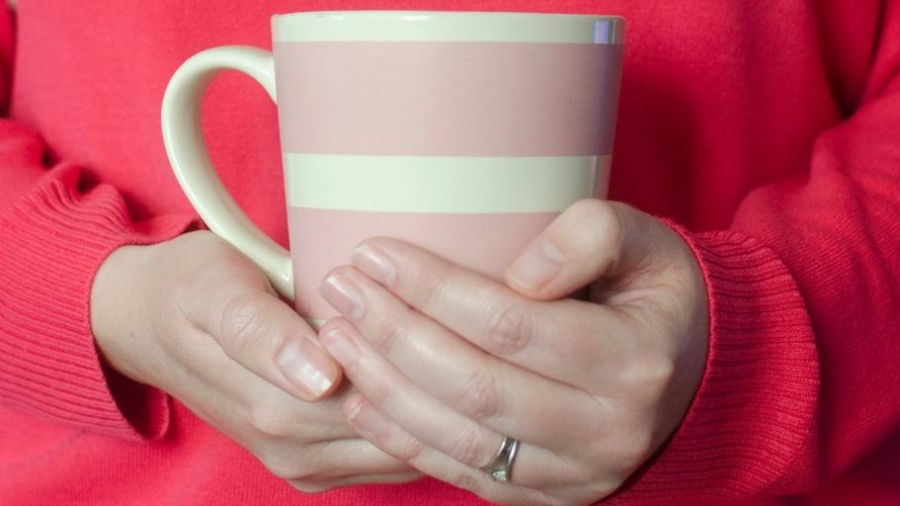
Try chatting to a new friend, or potential new friend, in a situation where they have a nice hot cup of tea or coffee in their hands.

Lets say you’re at a playgroup with your baby, then you can offer to fetch a cup of tea for you and the mum sitting next to you, while the babies have a stretch on the play mats.

Why?  Well, the theory is that holding warm drinks in our hands makes us think more warmly about the person we’re interacting with at the time.


It’s all down to something called haptic sensations, which is when touching objects with certain qualities makes us feel the associated emotions.

So if there’s a mum that you see on the school run every day that you think you would get on with, but are too nervous to start a conversation with during the morning rush, try saying hello at the next fundraiser coffee morning when she has a cup of hot coffee in her hands.


If you’ve already taken the first steps in a new friendship, and have arranged a playdate with another parent at your house then you can really use this theory of haptic sensations to your advantage.

When they arrive at your house, and the children are happily playing, sit them down on a sofa with a soft, snuggly thrown on it, or with a lovely tactile cushion.  And then hand them a mug of something hot to drink.

The warmth of the drink will help them warm to you even more, and the soft fabrics around them will help them feel more relaxed and at ease.

Once you start thinking about this you can see there are various times that this could come in handy:

  • If you’re meeting someone for a first date, arrange to do it at a coffee shop.
  • If your partner’s parents are coming over and you want them to warm to you, offer them a nice cup of tea when they arrive.
  • If you want to ask your boss at work for something, try picking up a coffee for them on your way into the office that you can give them before you start your pitch!

I know this might not always be a practical option, unless you want to start carrying around a flask of coffee with you to hand out warm drinks to people you want to make friends with.

But there are so many situations that do involve tea and coffee when you’re a parent, so it’s really worth knowing this theory, even if it just means that you feel a bit more relaxed approaching people knowing they’ll be more likely to warm to you while holding a warm drink!

How many of your parent friends did you meet over a cup of tea or coffee at a playgroup?


Mummies Waiting
self-care tips winter

7 self-care tips to get you through the winter

I’m writing this with the heating on and a hot cup of tea by my side as it is really starting to get chilly now.

Winter is well and truly on its way and if you’re the type of person who struggles a bit when the days get colder and shorter then hopefully this post will help.

Here are 7 self-care tips to help you feel a bit brighter and get you through the winter.

7 self-care tips to get you through the winter


1. Head outside.

Try and get out in the daylight as much as you can.

If you work 9-5 it can be really hard feeling like you’re leaving home in the dark and getting home in the dark.  So try and get out in your lunch break, even if it’s just for a 10 minute walk around the block.

The natural light will give you a boost in Vitamin D that really helps fight the winter blues as well as boosting your immune system.  It might be worth taking Vitamin D supplements if you find you can’t get out in sun enough.


2. Hit the gym.

Or make that walk on your lunch-break a longer power walk.  There was a study carried out at Harvard University back in 2005 that found that simply walking fast for half an hour a day, 5 days a week, or an hour a day, 3 days a week helped to improve feelings of depression.

If the weather is really against you then hitting the gym might actually provide even more benefits, if it’s a brightly lit gym that you visit.  Another study has been done that found that people who exercised under bright lights had better general mental health and vitality.


3. Try dry skin brushing.

Adding a few minutes of dry skin brushing to your daily routine can be a great way to give yourself a little lift.  Using a dry skin brush is a really effective way to get your circulation going in the mornings, and it can also boost the lymphatic system.

To really feel pampered treat yourself to an extra moisturising body lotion to use after your bath or shower.


4. Cosy up with a warm drink.

There’s nothing better on a cold day than a nice mug of something warm and comforting to drink.

Taking a few minutes to curl up and enjoy a hot chocolate, a horlicks or a spiced milk drink can feel lovely and indulgent when you’re feeling a bit blue in the winter.


5. Get creative.

Whether you enjoy sketching, baking or knitting, spending some time doing something creative can really improve your mood and keep the winter blues away.

If you’re not feeling particularly inspired then spend an evening browsing Pinterest, you’re bound to find a creative activity on there that you fancy trying.  And getting in to a state of ‘flow’ where you are completely absorbed in an activity has been shown to improve our sense of well-being.


6.  Eat the right things.

Choose delicious, warming, comforting foods to see you through the winter.  Things like soups and casseroles are great as they feel soothing but generally also contain lots of nutrients.  Bonus points if you add warming spices like garlic, ginger and black pepper which help boost the immune system, boost circulation and add extra antioxidants.

On a slightly less healthy note, make sure to treat yourself to some chocolate too.  After all, it has been shown to help relieve anxiety and make us feel happier.


7. Slow down and head to bed.

Sometimes the best way to take care of yourself in winter is to sort of give in to it.  When the evenings draw in, just allow yourself to slow down.  Rest, read, just hibernate a little.

And if you can, try to go to bed an hour earlier than normal.  The shorter days in winter mean we’re exposed to less daylight, so our bodies produce more melatonin (the sleep hormone that makes us feel tired and ready to sleep).  This means we tend to feel tired earlier in the evening than we do in the warmer months.

Rather than fight that urge, sometimes it’s best to go with it, and head to bed earlier.


What are your favourite things to do to take care of yourself in winter?

 
one trick reduce stress negative emotions

Try this one little trick to help reduce stress and negative emotions

I think it’s pretty safe to say that we all feel stressed every now and then.  Some of us more often than others.

There are all sorts of things we can try to help reduce our feelings of stress, and get negative emotions under control.  We can practice mindfulness, take a bit of time out to do some yoga, or try some flower remedies to see if they work for us.

But what if there was something we could do that took very little time or effort but that has been shown in studies to reduce these kinds of emotions?

Next time you’re feeling stressed out and overrun by negative emotions, try this one little trick.

Try this one little trick to help reduce stress and negative emotions

Talk to yourself in the third person.

Stick with me on this, there really is some science behind it!

A study was carried out in Michigan that basically found that talking to ourselves in the third person really does help us to regulate our emotions.  The researchers think it’s down to the fact that referring to ourselves in this way helps us get a bit of emotional and psychological distance from our problems.

So, if you’re stressed out about something, rather than asking yourself “why am I so stressed out by this?” you would think “why is Madeline so stressed by this?”.  Or, you know, whatever your own name is.


One of the things that is particularly interesting is that the researchers noted that thinking to ourselves in the third person isn’t any more taxing than doing it in the first person.

It doesn’t take any extra effort.

So it’s potentially a really simple way to reduce our feelings of stress, instead of things like mindfulness or yoga that take a fair bit of effort and concentration.


The researchers in Michigan carried out 2 different studies to test their theory.

  • In the first study the participants were asked to react to images that were either neutral or disturbing, in both the first person and the third person.  They found that emotional brain activity decreased really quickly, within one second actually, when the participants used the third person.


  • In the other study the participants were asked to recount painful experiences from the past, again using both the first person and the third person when referring to themselves.  The researchers found that the participants had less brain activity in the region that’s used for reflecting on painful emotional situations when they used the third person.


So both of the studies showed the same thing; that using the third person can help us to experience less negative emotions.

You just have to get past the fact that it feels like a slightly weird thing to do!

What do you think?  Would you give this a try next time you feel stressed out or upset?  I think it has to be worth a try, and can definitely see the logic behind it helping you distance yourself from your emotions a bit.


This post has been linked up with The List Linky.

creative ideas beat winter blues

7 creative activities to help you beat the winter blues

We’re well and truly into Autumn now, and it won’t be long before we slip into Winter.

If you’re one of the many people who suffer with the winter blues, or Seasonal Affective Disorder, then you might already be feeling like curling up and hibernating with a Game of Thrones boxset (while hoping that our winter doesn’t last anywhere near as long as the ones that Old Nan liked to talk about).

According to the NHS 1 in 15 people in the UK struggle with SAD.

So you’re really not alone in feeling down as the days get colder and the evenings get darker.  It’s thought to be down to the fact that in the winter we’re exposed to less natural light, so our bodies produced more melatonin, making us feel more lethargic and generally a bit down.

There are some things you can do to help get you through though, because if you’re anything like me when it comes to binge-watching then that boxset won’t last you the whole winter.

7 creative activities to help you beat the winter blues

A study carried out by Conner et al. last year found that creative activities can improve our sense of well-being.

Specifically, they found that engaging in a creative activity one day, leads to a boost in positive emotions the next day.  And feeling better makes us more inclined to engage in those creative activities again, and so we feel another boost and so on in a lovely little upward spiral.

Don’t worry though, you don’t have to be an artist or even a particularly creative person to get these benefits.  There are all sorts of creative activities you can try this winter that don’t require you to be amazingly skilled.  Remember, no one will be judging your efforts when Spring rolls around!

So, to get your creative juices flowing, here are 7 different things you can try this Winter:


  • Creative writing

Grab a blank notebook and a pen and get writing.  Who knows, you might have a bestselling novel in you!  If you’re not a natural story writer though you could try other forms of writing, like poetry.  If traditional poetry feels too intimidating then give haikus a go, they’re pretty fun to put together!

You could also go down a slightly different route and write some letters to your children.  Maybe put a little scrap book together, of your memories of what it was like waiting for them to arrive.  Your favourite memories of them so far.  Your hopes for their future.  Anything goes really.


  • Knitting and crocheting

These hobbies have had a bit of a revival in recent years, and have become a pretty trendy thing to know how to do.  And there is something cosy about the idea of curling up on the sofa of an evening, with a load of wool and creating something.

If you’ve never done it before then you can get a book on knitting or crocheting for beginners easily enough, or check out some of the videos on YouTube to get you started.  My friend has basically taught herself how to do it this year and what she makes now is amazing.  If you want something to inspire you, check out her Etsy shop – JoJoDesignsOnline.

Just remember to be kind to yourself, allow yourself to be a beginner.  It might take some time and practice but once you’ve learnt the basics you’ll be away and the dark winter evenings will fly by!


  • Cooking and baking

If you’d prefer a creative activity that gets you up off the sofa then cooking and baking could be the answer.  Dig out your old family recipe book, or spend a bit of time on Pinterest to get some recipe inspiration, then get making!

To get you started, you could try my really easy slow cooker carrot and lentil soup which is so lovely and warming to eat on chilly winter days.  Or if you’re more in the mood for something sweet, then my recipe for chocolate ginger bites should hit the spot!

chocolate-ginger-bites

  • Drawing and sketching

For the more artistically inclined, grabbing a sketchbook and some pencils and getting sketching could be a great option.  If you find yourself staring at the blank pages of your sketchbook, with inspiration not so easy to come by then Pinterest is your friend.  Just search on there for something as simple as ‘what to draw’ and you’ll find so many ideas to get you going.


  • Painting

Taking the last idea one step further, you could give painting a go.  There are so many options with painting that you’re bound to find a style to suit you.  You might discover a natural talent for watercolour landscapes, you never know!

Even if paint-by-numbers is more your level, it really doesn’t matter, as long as you’re enjoying yourself and being creative.


  • Playing an instrument/songwriting

Dig out your old recorder from your school days and see if you can still remember how to play three blind mice on it.  Or step out of your comfort zone and find a local music teacher to help you learn something new.  If writing is more your thing, then try your hand at songwriting instead.  You could even team up with a musical friend to come up with a melody and some lyrics together.


  • Photography

I’ve saved one of my personal favourite creative activities for last.  Photography can be such a great hobby for sparking your creativity.  And I love how you can practice indoors on wet, gloomy days but it can also give you a push to get outside to capture some landscapes or fun outdoor photos of your family.

It doesn’t stop when you press the shutter either.  Playing around with editing your photos can also be a lot of fun.  Try various filters to find a style you like.  See what photos work well as black and white rather than colour images.  Then get some of your pictures printed and spend a few evenings sorting them into albums, designing a scrapbook around them or planning some fun ways to display them in your home.

3 reasons to print and display photos at home


Hopefully this post has inspired you to get a bit creative this winter, and that it goes some way in helping to keeping the winter blues at bay.

What are your favourite creative activities?  Do you find you naturally spend more time doing them in the colder months?


You Baby Me Mummy
ways help children through tough time

5 ways to help your children through a tough time

Growing up can be pretty hard.  As soon as children start school they’re exposed to a whole heap of potentially stressful experiences and tough times.  And it can be heartbreaking as a parent to see your child struggling and wanting so much to just make it all better.

Maybe your child is being bullied, or finding it hard to fit in with the other children at school.  Maybe there are issues at home that they’re having a hard time dealing with, like a separation or a new baby appearing on the scene.

Whatever it is that they might be dealing with, here are five ways you can help your children through a tough time.

5 ways to help your children through a tough time

1.  Give them your undivided attention.

One of the most important things you can do is encourage your child to talk openly about anything and everything with you.  If you get the feeling that they want to open up to you then stop whatever else you might be doing and give them your undivided attention.

Let them know that they are important to you, and that their feelings are important to you.

Listen to what they have to say without forming any kinds of judgement.  Just let them know that you hear them, and that you understand.  It can go a long way to helping them feel better about what they’re experiencing.

2.  Take them outside.

Get out in natural daylight as much as possible.

Exposure to sunlight helps our bodies produce more serotonin, which in turn helps to reduce feelings of anxiety.  If your child is struggling with feelings of anxiety and general low mood, then getting a bit more sunlight on their face every day could really help to regulate their mood and help them through whatever tough time they’re dealing with.

In the winter months this can sometimes be a bit harder to do, so you could always consider getting a light box to use in the house.  These are also really great for anyone in the family who suffers with Seasonal Affective Disorder.

There are other benefits to getting outside too.

Getting out and away from the distractions of home can sometimes make it easier for our children to open up and talk to us about what they’re going through.

Also, if you head down to the beach together you get the added benefits of salty sea air.  And the local park is also a great option as walks in nature has also been found to help reduce anxiety and depression.

You could even add a plant or two to their bedroom, as the presence of potted plants has been shown to promote feelings of well-being.

help children through tough time

3.  Focus on the positives with them.

If your child is going through a hard time they might feel negative about everything.  So try and get them to think about the good things that are going on in their lives.  Shift the focus from the negative to the positive.

They might struggle with this at first, but encourage them to start small if they need to.  Get them to think about any little thing about their day that was good, or that they are thankful for.

You can also make a point of focusing on the good things about them.

Compliment them as much as you can.  Point out their strengths and their positive attributes to let them know how wonderful they are, to give them a boost and the strength to keep on trying.

You could even get some jewelry for your daughter that reminds her of her strength and of how much she’s loved.

4.  Try some random acts of kindness together.

When your child is going through a hard time it can be all-consuming.  Getting them to carry out some random acts of kindness can be a great way to distract them from their worries and focus their attention on something else.

Doing good can also cement the idea in their mind that there is good in the world; far more good than bad.

It can also make us feel really good too.  Dr David Hamilton has listed 5 side effects of kindness, one of which is that it makes us happier.

He writes:

When we do something kind for someone else, we feel good … On a biochemical level, it is believed that the good feeling we get is due to elevated levels of the brain’s natural versions of morphine and heroin, which we know as endogenous opioids. They cause elevated levels of dopamine in the brain and so we get a natural high, often referred to as ‘Helper’s High’.

So we can really help our children feel better, as well as getting a new sense of perspective on their situation, by carrying out some random acts of kindness together.

5.  Do some yoga with them.

Exercise has been proven to help with anxiety and depression.  And yoga has a lot of added benefits too.  I wrote a post last month about 10 benefits of yoga for children, which included things like how it helps teach them persistence and how it helps support their mental health.

You could find a local family yoga class to go to together, or pick up a dvd or kids yoga book to have a go at home.

Doing yoga together will help your child feel more connected to you, as well as helping you both feel calmer and better able to handle anything they might be going through at that time.  It can also help you to see things more open-mindedly, so it could even help you come up with new solutions to your child’s problems.

help children through tough time yoga

I really hope this post helps you feel better able to support your child if they’re going through a tough time. 

It can be so hard as a parent to see our children struggle, and hopefully some of these ideas will help you to feel a bit less helpless and more able to help them through the hard times in life.

dark light better sleep

The importance of light for better sleep

The first night after we brought Rhys home from the hospital he barely slept at all.  I was up with him pretty much all night, absolutely exhausted.  Which it turned out is a really common experience with newborns.

They don’t have any concept of night and day when they’re first born.  So one of our first jobs as parents is to try and set their little body clocks and get them to be more awake during the day and sleep more at night.

Light plays a huge part in this, and throughout our lives it’s so important for a good night’s sleep.

The importance of light for better sleep

We should be exposed to natural light as much as possible during the day.  Exposure to sunlight increases the levels of serotonin in our brains, making us feel calmer and happier and more awake.

In the summer it’s often easier to make sure we get enough natural light as we tend to be out and about a bit more. 

But lots of people find it harder in the winter, and seasonal affective disorder is really quite common.  If you find that you’re suffering with the lack of natural light in the mornings to wake you up and get you going, then something like the Lumie body clock can be a great option for keeping your body clock on track and your mood lifted.

As the day goes on and we get closer to bedtime, we should be reducing the amount of light we’re exposed to.

Our bodies naturally produce a hormone called melatonin in the evenings, which prepares our bodies for sleep and makes us feel sleepy.  The thing is, too much light can suppress the body’s production of melatonin.

So to keep our body clocks on track it’s really important to try and keep lights dim at bedtime, and throughout the night as much as possible.

Adults might want to try sleeping with a light-blocking sleep mask on to stop as much light as possible reaching their eyes.  For children’s rooms black out blinds are a great option to stop natural evening light or artificial light from street lamps creeping in and disturbing sleep.  There are so many different designs now for blinds, you can choose something that fits your child’s room like these Star Wars blinds from Velux.

If you have a little one who is scared of sleeping in complete darkness you might need to have a night light in their room.  If you can, try and find one that emits red light rather than blue light, as it’s less disruptive to our circadian rhythms.  The same goes for bedside lamps, if you might need to turn one on in the middle of the night to care for your baby, then try and get a light that emits a red light rather than blue.

Remember too that electronic devices with bright screens can affect us too so try to turn off the tv/computer about an hour before you need to go to sleep, and resist the urge to scroll through Facebook on your phone in bed before you drift off.

Easier said than done I know, but you really might find the quality of your sleep improves you step away from the bright lights of electronics at bedtime.

Disclaimer – this is a collaborative post

how-to-rock-to-do-list

The psychology of to-do lists – how to rock yours and get stuff done

If you’re anything like me, you’ll know that feeling of having a thousand and one things that you’re trying to keep track of, and keep on top of every day.  I find it utterly exhausting trying to keep up with my mental to-do list.  I much prefer getting everything out of my head and on to paper.

I still feel though that I’m not getting the best out of my to-do lists.

One reason for this is that I tend to have several lists on the go at once, so I still feel completely overwhelmed and end up losing track of where I’ve even put some of those lists.

So if you, like me, need some help to rock your to-do list and actually get stuff done, this is the post for you.

The psychology of to-do lists

I think most of us love a good to-do list. 

One of the reasons they help us feel better is down to a psychological phenomenon called the Zeigarnik effect that comes into play when we get all our to-dos out of our heads and onto paper.

Zeigarkik, a Russian psychologist, was watching waiters in a busy restaurant one day and noticed that they were brilliant at remembering what people had ordered.  But as soon as the dishes were served, the memory of who had ordered what just vanished.  It wasn’t important any more for them to remember the order.  They had completed that task and so there was no need for their brains to hang on to that bit of information any more.

What Zeigarnik concluded from watching all this, was that we tend to remember the things we need to do better than things we have completed.

A more recent study by Baumeister and Masicampo at Wake Forest University took this idea a little further.  They found that our brains are occupied with the things we need to get done, but simply writing down a plan for getting them done can free up that brain space and stop us feeling so anxious and overwhelmed by how much we have to do.

So that’s a bit of the psychology behind why to-do lists are so useful, and now we can get to the part about rocking yours and getting more stuff done!


Get it all out.

The best place to start is with a huge brain dump.

Grab a pen and a notebook and get everything single task that is floating around your head down on paper.  Don’t try and edit yourself at this stage, just write down every last to-do that you can think of.


Break it down.

Go through your list and start to break it down.  I like to split my to-dos into separate lists for my blog, my photography and my life in general.

From there start looking at any tasks that are really big and overwhelming, or just a big vague.

Make sure each item on your to-do list is easily actionable.  So rather than have something like ‘get fit’ on your list, you want to have a few things like ‘book an induction at the gym’ and ‘buy new running shoes’.


Get your priorities straight.

Look through your list and work out which tasks are the most important/urgent.  Then look at the tasks that will bring you the most results.  The Pareto Principle states that, in many cases, 80% of the effects come from 20% of the causes.

If you take a look at all the items on your list, it most likely that only a few of them are related to important issues.  These are the tasks you want to prioritise and try and clear off your list first according to the Pareto Principle.  Those few important tasks will produce the most significant results, more so than if you clear off 20 smaller, less important tasks from your list.


Make a plan and set a deadline.

Once you know which tasks to focus on first, set yourself deadlines for when those tasks need to be completed.  Be realistic with your deadlines, but be strict with yourself too.  Parkinson’s law states that work expands to fill the time available for its completion.

So if you have a task that needs to be done by the end of the day, you will get it finished before you head to bed.  But if you decide that actually it needs to be done by the end of the week, then it will take that long to complete it.

Giving yourself a tight deadline forces you to fight against the urge to procrastinate and just get things done.


Celebrate your completed tasks.

I’m not saying you should throw yourself a party or crack open the champagne, but giving yourself a little reward for crossing items off your to-do list isn’t a bad idea.  It’s all down to operant conditioning.  If you celebrate completing one of your tasks with a little reward, then you’ll feel good about it, and so be more likely to want to keep going and cross more things off your list.

Speaking of which, make sure you actually cross things off your list.  Psychologically, this gives you a sense of achievement, a little boost which encourages you to keep working on the rest of the list.


Hopefully this approach to tackling your to-do list will help make it more efficient and you more productive. 

The main thing really though, is to just start taking action on it.  Just do something, anything, to get some momentum going and get some items crossed off that list.

Look for little windows of time when you can fit in some of the smaller jobs on your list, like phoning to make your dentist appointment while waiting for the kettle to boil for your mid morning cuppa.  Having a well-organised to-do list means that when you find yourself with a bit of time, you can get straight on with tackling the important tasks, rather than trying to work out what needs to be done.

Are you a to-do list fan?  Do you work better with a paper copy of your list, or have you moved to a digital system?  I would love to know what works best for you!