psychology of giving

The psychology of giving and why it feels so good

Last Friday the children both came out of school with big smiles on their faces, feeling really excited because they had something special for me in their bags.

The parents association had organised a really lovely event for Mother’s day.  The children went in to school with a few pounds and were then able to go to the hall and choose a special present for us mums from a huge range of options.

They were given help to pick something out and then the gifts were beautifully wrapped up ready for them to give to us on Mother’s day.

What was so wonderful is how excited the children all were about it.  Rhys and Nerys were amazing though, and didn’t give me any hints at all as to what they had chosen for me.  They were just desperate for Mother’s day to come around so that they could see me open their presents.

I just thought it was so lovely that the act of giving seemed to make them so happy, and what’s really interesting is that there really does seem to be an innate part of us that takes real joy in giving to other people.

Why giving back feels so good

Studies have actually been carried out on children that have found that even at a young age we gain joy and satisfaction from giving and helping others.

One particular study carried out by Aknin et al. (2012) involved asking toddlers to share treats with a puppet and found that they showed more happiness giving the treats to the puppets than they did when they received the treats themselves.

The researchers came to the conclusion that the children were too young to have been particularly influenced by social expectations and so they believe that we have evolved to be naturally inclined to find happiness in giving to others.


This feel-good factor does seem to stay with us as we get older too.

A study by Dunn et al. found that people were happier when they spent around $5 a day on someone else, than if they spent that same amount of money on themselves.  I think we’ve all had experiences where we’ve felt that little happy glow after paying for a friend’s coffee, with no expectation of the gesture being returned.  Or felt so happy and excited when out shopping for presents for our loved ones.

It does spread further than that though.

If you’ve ever taken part in a sponsored event for charity you know how good it feels to do something proactive to raise money for a cause you believe in.  If you want to support a cause close to your heart, but don’t know where to start then this list of 100 unique fundraising ideas will get the inspiration flowing.  And if that’s still not enough ideas, then here are another 151 fundraising ideas with a mix of simple and more involved ways you can start fundraising.


Some people feel so passionately about giving back to others that they build their whole business model around it.

There are some amazing businesses here in Swansea that have done just this, and who go to show the not for profit idea can work for all sorts of industries.  Square Peg is a lovely coffee shop in Sketty (they also now have Peg 2 in Mumbles), with a warm and welcoming atmosphere, great food and especially great coffee.  They also give their profits away to good causes and offer training and apprenticeships in their coffee shops to help people get valuable work experience.

Over in Clydach there’s Dynamic Rock which I really have to pay a visit to at some point.  They’re a not for profit climbing centre who offer sessions for everyone from children and complete beginners to experienced climbers and businesses looking for a unique teambuilding activity.

All their profits go back into the business, so they can really serve the local climbing community as well as making climbing a more accessible activity for everyone.

I think Rhys would absolutely love to give indoor climbing a try, and I love the passion that everyone at Dynamic Rock seems to have for it.


Whether it’s just something small like buying a small present for someone, or even just paying them a compliment, or something huge like building a whole business around giving back, there’s a lot to be said for being generous and giving.  It’s a real win-win situation where everyone involved benefits and feels good.

And that seems to be mainly just down to basic human nature which is really quite nice to know if you ask me!

Oh, and in case you were wondering, I was given a lovely tealight lantern to hang in the garden and a very sparkly hair-slide for Mother’s day!
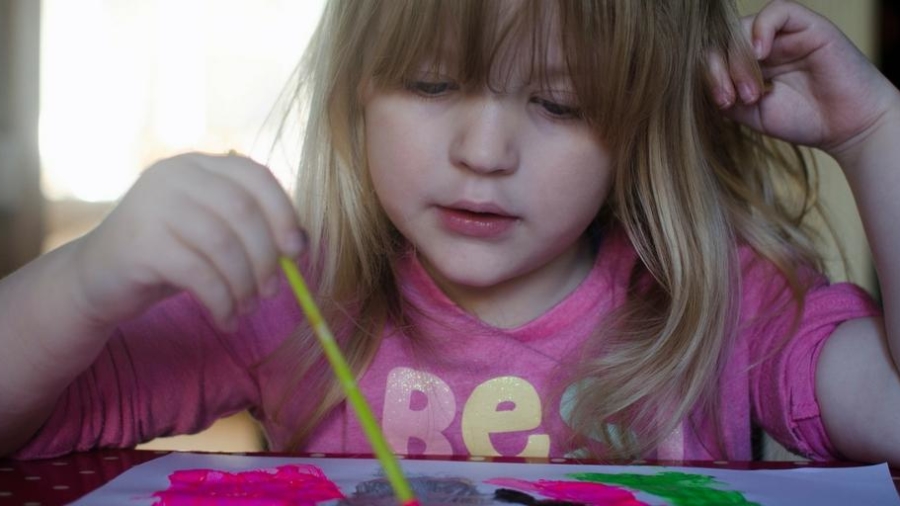
young girl painting

Developing child creativity with arts and crafts activities

Reading and mathematics are two “major” subjects in most schools, but what about creativity? Although arts and crafts are considered a luxury, they can also be the building blocks of child development.

Learning to be creative and appreciating beauty is ever more significant for next generation kids.

Here are 5 benefits of developing your child’s creativity:

Developing child creativity with arts and crafts activities

  1. Fine motor coordination. Children need motor coordination to learn how to write, cut patterns, and draw shapes. These skills also help them in other areas of their life, such as eating and dressing.


  1. Self-esteem booster. At first, rather than choosing difficult art projects, select the ones that match with your child’s current skill level. This will help them build their self-esteem, and give them a great sense of accomplishment, especially when they complete their crafts successfully. Later, as your children begin to explore more, you can introduce more challenges just to keep them engaged.


  1. Bilateral coordination. Crafts activities such as drawing, coloring, and cutting require your child to use both their hands. This skill can also help them in other areas of their life, including typing, tying shoes, writing, and much more!


  1. Self-regulation. Your child needs to learn to “wait” when doing crafts activity such as drying, which can help them develop life’s vital skills such as patience and self-control.


Remember: Arts and crafts must also teach your child to be flexible.


When exploring creativity, there’s no right or wrong way – just a matter of achieving a balance.


  1. Bonding and fun. You and your children will spend quality time together to create something memorable and fun, which you’ll both look at it with a sense of pride and joy.


And, here’s how you can inspire creativity in your child, in 6 simple ways:


  1. Avoid drawing with your kid. Parent often sit beside their children and draw along with them, which can discourage him. Instead of drawing with them, just stand there right next to them and let them know that you’re interested and supportive of their artwork.


  1. Don’t give directions. Don’t tell your children what they should draw or how they should draw. For example, rather than saying, “draw an elephant,” encourage them by saying, “play around with the colors using different types of paper and brushes.”


  1. Be specific about their artwork. When giving feedbacks on artworks, try being specific, rather than vague. For example, you can say, “I see that you’re using a lot of oranges. Why did you select that color?”


  1. Prepare an art space. Establish an art space for your child so that they can experiment with their artwork (and be messy). It could be outside the house, in the backyard, garage, or inside the home (top of your kitchen table – my favorite).


  1. Let it be. Once they’ve completed their artwork, do NOT suggest additional changes, which will help them feel appreciated, and know that what he’s created is enough – even if it was merely a dot on the paper.


  1. Explore their process. One of the most effective ways to boost conversation about your child’s artwork is asking them, “Did you enjoy making it?” or, “Go on, tell me how did you do it?”


And, here are 3 easy to follow craft ideas you can do with your kids:


Idea #1: Cotton Ball Snowman


  • Make three circles to outline your snowman.
  • Pour glue into each circle completely
  • Stick cotton balls in those circles to make your snowman
  • Be creative and make a face for your snowman and accessorize with gloves, goggles, hat, etc.


Idea #2: Snowflakes


  • Trace a circle on a paper
  • Cut the circle
  • Fold the circle in half, 3 times
  • From the edges, draw shapes using a pencil
  • Cut along the designs using scissors
  • Open your circle slowly


Idea #3: Holiday Inspired Cards


  • Cut a piece of construction paper into a rectangular shape (10 inches by 6 inches, for example).
  • Write your message on the paper and make your child trace over it.
  • Using gum, stick a picture of your child.
  • Include holiday inspired stencils, then, ask your child to trace on the card.
  • Use a lot of different materials: paint, markers, glitter, colored glue, magazines, scrap paper, buttons, etc.


As you can imagine, all little ones love sticking their things – from cards to snowflakes – on their walls and ceilings. And, they’ll also absolutely adore you if you can add their names to labels.


Here’s the good news: you can personalise their creations quickly and easily by using sewing labels or personalised stickers (https://wunderlabel.co.uk/woven-labels/bespoke-with-own-logo ).


Disclaimer: this is a collaborative post

bright pink flower

Try this one little trick to feel happier in your relationship

Unless you’re one of those couples that is completely in sync and agrees about everything, chances are you and your partner have fights from time to time.

Research generally supports the idea that disagreements are normal and healthy in relationships.  What really matters is the way that you fight, and how you resolve that conflict and move forwards.

So next time you get annoyed and start fighting with your other half, try this one little trick to resolve things and to feel happier in your relationship.

Try this one little trick to feel happier in your relationship

Ask yourself, “how will I feel about this current conflict in one year’s time?”

A study carried out by Huynh et al. in 2016 found that asking this question, and thinking about their conflicts in terms of the future, helps people to feel more positive about their relationship.

They found that when people think about their relationship from a future perspective, rather than how they’re feeling right now in the heat of the moment, they tend to feel more forgiving and see their relationship more positively.

One of the author’s of the study wrote:

“When romantic partners argue over things like finances, jealousy, or other interpersonal issues, they tend to employ their current feelings as fuel for a heated argument.  By envisioning their relationship in the future, people can shift the focus away from their current feelings and mitigate conflicts”

The study asked two groups of people to think about an argument they had recently with their partner.

One half of the group were asked to explain how they felt about the argument at the time that it happened, while the other half were asked to imagine how they would feel about it in the future.

What the researchers found was that the group who imagined themselves in the future blamed their partners less for the argument, and were more forgiving.  They also showed more insight into why the argument happened in the first place.

This group saw their relationship more positively than the group that weren’t thinking from a future perspective, and they also felt better about their relationship.

At the end of the study Huynh reported:

“Our study demonstrates that adopting a future-oriented perspective in the context of a relationship conflict — reflecting on how one might feel a year from now — may be a valuable coping tool for one’s psychological happiness and relationship well-being.”

It wasn’t mentioned in the study, but I think this could also be a useful strategy to use to stop some arguments happening in the first place.

If you get annoyed with something your partner does, and find yourself gearing up to start a fight about it, stop.  Take a few minutes and ask yourself how you’ll feel about the issue in a year’s time.  This time next year, will it still bother you that he left his dirty socks on the floor, or that she pulled all the covers over to her side of the bed?  Probably not!  So is it really worth picking a fight over it?

Do you think this would work for you in your relationship?  Or do you tend to get so caught up in how you’re feeling in the middle of a row that you would find it hard to see things from a different perspective?

I’d love to hear what people have to say about this in the comments.

seven small coloured hearts

7 amazing facts about love

It’s that time of year, when love really does seem to be all around.  And I’m embracing it, because love really is pretty wonderful.

So today I’m giving you 7 amazing facts about love to help you get in the Valentine’s day spirit.

7 amazing facts about love

7 amazing facts about love


1.  Your heart rate can synchronise with your partner’s

People often talk about being in sync with their partner, and apparently this can quite literally be true.

A small study carried out by Ferrer and Helm in 2012 found that when couples gazed calmly into each other’s eyes for three minutes their heart rates changed so that they were in sync.


2.  Hugging a loved one can reduce pain

I’ve written before about the wonders of Oxytocin and how it can make us feel better.  This amazing hormone is produced when we hug our loved ones, and according to research carried out in America it can really help reduce pain.

The researchers gave patients with headaches a dose of oxytocin as a nasal spray, and found that 50% of the patients reported their headache pain was half as bad as a result.  Not bad, considering only 11% of patients who were given a placebo reported their pain was reduced after four hours.

So next time you have a headache, try having a good cuddle rather than reaching for some tablets.


3.  Looking at a photo of them can also reduce pain

If you’re in pain and your partner’s not around to give you a hug, then try just looking at a photo of them instead.

A study carried out at Stanford University found that participants felt a significant reduction in pain when looking at a photo of their partner, compared to when they looked at a photo of an acquaintance.


4.  Love changes over time

If you’ve been with your partner for years you’ll know that things are different now from the way they were when you first got together.  Researchers from the University of Pavia have found that the romantic love we feel at the start of a relationship, the kind that leaves you ever so slightly giddy, lasts about a year.  That’s not necessarily a bad thing though, after that time couples move to a more stable, companionate love.


3 small pink wooden hearts


5.  Love is a drug

Well, it acts just like one.  When we fall in love our brains release chemicals and hormones that produce the same effect on us as taking Cocaine.   The chemicals work quickly too; a study carried out at Syracuse University found that we can fall in love in as little as a fifth of a second.


6.  You can feel happier by expressing gratitude to your loved ones

If you want a happiness boost, take a minute to phone someone you love and tell them how grateful you are for them and the things they’ve done for you in the past.  Studies have shown that thinking about how thankful you are for them can make you feel a little bit happier, but actually phoning them up and telling them how grateful you are causes a significantly bigger jump in your own happiness.


7.  Love is what matters the most

A pretty epic study was carried out over the course of 75 years that found that ultimately love is all that really matters in living a fulfilled life.

The Harvard Grant Study followed a group of 268 men for 75 years and collected data on various parts of their lives at regular intervals.  One of their main findings at the end of the study was that love is key to a happy and fulfilling life.

The psychiatrist who directed the study, George Vaillant, wrote that there are two pillars of happiness, “One is love, the other is finding a way of coping with life that does not push love away.”

He felt that the most important finding from the study is that the only thing that really matters in life is love, and the relationships we form.


So there you have it, 7 pretty amazing facts about love. 

And it’s not all about the love you might have as part of a couple.  The love you feel for your child, or your best friend, is just as powerful.  It’s all about connection more than anything else.

how open and honest should we be with our children

How honest and open should we be with our children?

I recently wrote a post about why our children lie, and what we can do to encourage them to be honest.

One of the points I made was that we need to be modelling honest behaviour, if we want our children to be honest too.  It did make me think though, how honest and open should we really be with our children?

How honest and open should we be with our children_ (2)


For me, and my family, the answer is to be really quite honest and open as much as possible.

Which sometimes means having interesting and, sometimes, quite hard conversations with the children.

Last year we had a lot of talks with Rhys about death, after his friend’s dog passed away.  He was really upset about the whole idea of people dying, and asked some quite tricky questions about the subject.

One of his questions was ‘do children die?’.

I hesitated for a second.

I wanted to protect him, to protect his innocence, to keep the harsh truths from him.

But I didn’t.  I told him the truth, that yes, sometimes children die.  Because I want him to trust me.  I couldn’t bear the idea of him hearing on the news that a child had died or worse, for a child he knows to die, and for him to have to process not only the fact that it had happened but also that I had lied to him about the possibility of it happening.

On the other side of things, I’ve also been asked lots of questions about how life begins.  How babies are made, and how they get out of the mummy’s tummy.

And again I was honest in my answers.  

I gave as simple a reply as I could, but it was a truthful one too.

Children are quite accepting of things I think, if you’re just honest with them.  And really, what other option is there when it comes to questions about where babies come from?  Do people really still talk about the stork these days?!

I’m not completely honest with my children though, I’ll admit.

We ‘do’ Father Christmas in our house.  And when the time comes the tooth fairy will be allowed in too.  White lies are sometimes told about the shops being shut or Peppa Pig not being on tv at the moment.

And I have simplified things at times, explaining things in a way that the children will understand and perhaps leaving out some details that they just don’t need to know at ages 6 and 3.

There have also been times when I’ve had to be really honest and admit I don’t know the answers to their questions.  Which I think is a good thing too.  I’m not perfect, I certainly don’t have all the answers.  And I think it’s good for my children to know that, to know that there are some things in life that we just can’t answer with complete certainty.

What do you think?  How honest and open are you with  your children about the big, and the small things, in life?


couple walking holding hands on beach at sunset

36 questions to help you reconnect and fall in love all over again

My husband and I have been married for a little over 10 years.  And have been together since the end of 2003.

I was just 21 when we met, which just feels so young now.  And I know I have changed a huge amount since then.  I’m really not still the same person that I was back then, fresh out of uni and just so young in so many ways.

Luckily we’ve sort of grown and changed and adapted together as a couple and I know that Steve knows me incredibly well.  Still, there are bound to be things that we don’t really know about each other.

So I really love this idea of taking some time to sit down together and really chat and get to know each other all over again.  To reconnect.  To fall in love all over again, as the people we have become.

36 questions to help you reconnect and fall in love all over again

A group of psychologists (Aron et al.) carried out a study back in 1997 that asked couples to spend 45 minutes together, working their way through 3 sets of questions, 36 questions all together.   By the end of the 45 minutes they found that many of subjects had become as close as their average established relationship which had taken years to form and develop.

These questions can be an amazing way for new couples to get to know each other, and quickly form a really close bond.  But I think they can be just as effective for couples like me and my husband, to re-establish that closeness and most likely learn something new about each other.

So, if you fancy giving this a go, just grab a drink, get comfy and work your way through the questions, with both of you in turn answering before you move on to the next question.

Here are the questions:

Set one

1. Given the choice of anyone in the world, whom would you want as a dinner guest?

2. Would you like to be famous? In what way?

3. Before making a telephone call, do you ever rehearse what you are going to say? Why?

4. What would constitute a “perfect” day for you?

5. When did you last sing to yourself? To someone else?

6. If you were able to live to the age of 90 and retain either the mind or body of a 30-year-old for the last 60 years of your life, which would you want?

7. Do you have a secret hunch about how you will die?

8. Name three things you and your partner appear to have in common.

9. For what in your life do you feel most grateful?

10. If you could change anything about the way you were raised, what would it be?

11. Take four minutes and tell your partner your life story in as much detail as possible.

12. If you could wake up tomorrow having gained any one quality or ability, what would it be?


Set two

1. If a crystal ball could tell you the truth about yourself, your life, the future or anything else, what would you want to know?

2. Is there something that you’ve dreamed of doing for a long time? Why haven’t you done it?

3. What is the greatest accomplishment of your life?

4. What do you value most in a friendship?

5. What is your most treasured memory?

6. What is your most terrible memory?

7. If you knew that in one year you would die suddenly, would you change anything about the way you are now living? Why?

8. What does friendship mean to you?

9. What roles do love and affection play in your life?

10. Alternate sharing something you consider a positive characteristic of your partner. Share a total of five items.

11. How close and warm is your family? Do you feel your childhood was happier than most other people’s?

12. How do you feel about your relationship with your mother?


Set three

1. Make three true “we” statements each. For instance, “We are both in this room feeling …”

2. Complete this sentence: “I wish I had someone with whom I could share …”

3. If you were going to become a close friend with your partner, please share what would be important for him or her to know.

4. Tell your partner what you like about them; be very honest this time, saying things that you might not say to someone you’ve just met.

5. Share with your partner an embarrassing moment in your life.

6. When did you last cry in front of another person? By yourself?

7. Tell your partner something that you like about them already.

8. What, if anything, is too serious to be joked about?

9. If you were to die this evening with no opportunity to communicate with anyone, what would you most regret not having told someone? Why haven’t you told them yet?

10. Your house, containing everything you own, catches fire. After saving your loved ones and pets, you have time to safely make a final dash to save any one item. What would it be? Why?

11. Of all the people in your family, whose death would you find most disturbing? Why?

12. Share a personal problem and ask your partner’s advice on how he or she might handle it. Also, ask your partner to reflect back to you how you seem to be feeling about the problem you have chosen.


I absolutely love this idea of taking some time out and using these questions to get talking about various things that most likely won’t come up in daily conversation.

Reading through them I’m quite confident I know what Steve would say in answer to quite a few of the questions, but there are also quite a few where I’m just not sure what he would say.  And now I really want to know his answers!

When was the last time you sat and really talked to your partner like this?  Do you think that doing this exercise would make you feel closer to each other?


Mummies Waiting
why children lie how encourage tell truth

Why do children lie and how can we encourage them to tell the truth?

One of the big things for me as a parent is for my children to trust me.

I want them to know that I’ll be true to my word, that they can trust that I’ll be there for them and that, as much as possible, I’ll be honest with them.

Of course there are little white lies, and there are things like Santa that are all part of the magic of childhood.  Sometimes I think we do need to bend the truth a bit to protect our children and let them keep their innocence a little.

For the most part though we’re taking the honest road.

And I’m hoping it will lead to my children being honest too.

I know there will be lies along the way of course, because with all the will in the world we do all lie now and then, for various reasons.  So why do children lie?  And what can we do to encourage them to tell the truth?

Why children lie

Why do children lie?

There are a few different reasons why children might lie, and children of different ages might also do it for different reasons.

Most of the time though it boils down to either wanting to avoid getting into trouble or having to do something they don’t want to do, or to make themselves look better and to impress other people.

Even young children will lie and say they weren’t the ones to spill the milk, or paint the dog, or eat the chocolate if they think they’ll get in trouble for doing it.

And as children get older you might find that they start exaggerating a bit, or making things up completely, to impress their friends at school.

One thing that’s worth bearing in mind is that lying is a completely natural part of a child’s development.  It shows that they have developed a theory of mind, which means that they’re aware that other people have knowledge and experience that is different to their own.


So how can we encourage children to tell the truth?

  • Be honest with them

This is so important.  Get rid of any ‘do as I say not as I do’ thinking.  As parents we really need to model the behaviour we want to see in our children.

So tell them the truth as much as possible.  If you make a mistake, let them see you being honest and owning up to it.  If you give in to cravings one night and eat their chocolate bar, don’t lie about it the next day.  Be honest and apologise, then make it up to them as soon as you can.


  • Work out why they’re lying

If you can understand their motivation for lying then you can talk to them about it and find a better way to do things together.


  • Praise honesty

When your child does tell you the truth about something, make a point of saying thank you to them for being honest.  Make it clear that you would always rather know the truth so that you can help them and move forwards together.


  • Use books and stories to talk about lying

Reading stories like ‘the boy who cried wolf’ with your children can be a good way to start a conversation about lying and how it can end up with people never believing anything you tell them.  I also watch out for any storylines in the tv programmes they watch that involve things like lying, because I find that’s a great way to start chatting to the children about it.


  • Don’t call them a liar

Be really careful with giving your child this label of being ‘a liar’, even if you catch them in a blatant lie.  It can so easily become a part of the way they identify with themselves, and they’ll potentially be more likely to keep on lying in the future, if they believe that they are ‘a liar’.


  • Don’t get angry

If you sense that they want to tell you something but are nervous then make it clear that you won’t get angry about whatever it is that has happened.  The key here is obviously to stay true to your word, and stay calm and not get angry when they tell you!

Last year we went through a phase with Rhys where he was getting wound up by children in his class, and lashing out.

Each day on the way home I would ask him if he had been angry that day, and if he had hit anyone.  He would generally hesitate to answer, before I reminded him that I wouldn’t be angry with him about it.  And so he would then admit that he had been angry that day.

By getting him to be honest, and staying calm about it myself, we were then able to talk through what had happened to make him so angry and what he could do differently next time instead of lashing out.


I hope that by keeping calm, and letting our children know that they can always talk to us will lead to them being honest with us as they get older.  I would always rather know what my children are getting up to, even if it’s not exactly what I would like them to be doing!

Do your children tell many lies?  Do you have any more advice for encouraging honesty as children get older?


Keep Calm and Carry On Linking Sunday