try little trick happiness boost

Try this one little trick for a happiness boost

Happiness.

We’re all looking for it aren’t we?  Most of us, if we were honest, would say that all we really want out of this life is to be happy.

And there are all sorts of things we can do to get a happiness hit.

We can hug our loved ones, to get a good dose of oxytocin.

We can indulge in delicious food and drink, and then burn off the calories with some exercise to release some lovely endorphins!

But there are also some slightly more random ways we can get a happiness boost, like this:

Try this one little trick for a happiness boost


Mow the lawn!

It might not seem like an obvious thing to do to feel happier, but stick with me here.

The smell of freshly cut grass is right up there as one of my favourite smells.  It’s just so fresh and smells of spring and sunshine and all things good!  The smell of it has always made me feel happy, and most people seem to feel the same.

A survey conducted by Harris brushes in 2015 found that the British public voted freshly cut grass as their 3rd favourite smell.  Beaten only by freshly baked bread and bacon.

And apparently there could be some science behind why we love the smell so much.

When grass is cut, various chemicals are released into the air that have been found to have stress-relieving properties.

The chemicals work on both the amygdala and the hippocampus, the parts of the brain that deal with emotion and memory.  They are also responsible for the endocrine system, which is in charge of releasing stress hormones into our blood stream.  It seems that smelling that gorgeous scent of cut grass can regulate those areas of the brain and make us feel calmer and happier.

And the best part is, you don’t have to be the one to cut the grass to get the benefits!

So, sit back and relax while someone else cuts the grass for you, or head to your local park when the mowers are out, and get a nice big happiness boost.


This post has been linked up with Blogger Club UK and KCACOLS.

crave junk tired sleep deprived

Why you crave junk food when you’re sleep deprived

When Nerys was first born she was really quite a good sleeper.

Then we hit the four month sleep regression and oh my word did it all go to pot.  For months and months she woke through the night.  Sometimes she would sleep for 2 or 3 hour stretches.  Other nights she would wake every hour.

And I was exhausted.

And I ate really badly.

I found myself craving sugary junk food all the time.  And pretty much all the time I gave in to those cravings.  I dread to think how many biscuits and pieces of cake I ate that year.

Now Nerys sleeps much better, but I’m still disturbed by my children at least once every night.  That combined with late nights writing and editing photos means I’m still pretty tired these days.  And I still eat more junk than I should.

But, I’ve found something that makes me feel a bit better about it.

I’ve done some research and found out the reason why we eat more junk when we’re sleep deprived.  

Why you crave junk food when you're sleep deprived

Sleep deprivation does some pretty wacky things to you.

It can make you forgetful.  It can make you clumsy.

It can even make it hard for you to show positive emotions on your face, or recognise positive facial expressions on others!

What it also does is make it harder for you to control cravings for junk food.

Part of it is hormonal.  Lack of sleep has been linked to an increase in the peptide ghrelin, which stimulates hunger, as well as a decrease in leptin which is the thing that lets our brains know that we’re full.

Part of it is a need for energy.  And we go for chocolate and sugary foods to get that energy hit as quickly as we can.  Blame evolution for that one.

And part of it is good old psychology.  Research by Greer et al in 2013 found that lack of sleep reduces our self control.  The researchers scanned the brains of 24 people after both a good night’s sleep and a bad night’s sleep.

They found that after a bad night there was increased activity in the areas of the brain that are associated with rewards.  And there was reduced activity in the frontal lobes, which is the part of the brain that helps provide self-control.

The researchers explained:

“What we have discovered is that high-level brain regions required for complex judgments and decisions become blunted by a lack of sleep, while more primal brain structures that control motivation and desire are amplified.”

Basically, when we’re sleep deprived we just don’t have the amount of self-control we would normally have.  And we don’t make the best decisions when we’re tired either.  A study that was carried out in Sweden in 2013 found that men who went food shopping when they were sleep deprived bought around 9% more calories than those who had slept well.

I don’t know about you, but that makes me feel a bit better about all the biscuit binges.  It’s really not my fault when I’m tired, I genuinely can’t help myself!


Cuddle Fairy
one little trick help sad worried child

Try this one little trick when your child is sad or worried

Rhys is a really sensitive child.

You might not think it sometimes, when you see him running around, doing karate chops and playing pokemon.

But he really is sensitive.  He takes things to heart and we’re starting to realise that he worries a lot.

There have been a few occasions recently where he’s been worried or sad about something.  And it’s taken quite a long time to get him to talk to us about what’s on his mind.

Part of the problem is the fact that he’s only 5.  I don’t think he always fully understands what he’s feeling.  And he often doesn’t have the ability to express those feelings to us.

Once we’ve worked out what the issue is though, we’re still faced with a problem.  How do we help him feel better?  

I’m finding that this little bit of psychology can help.

Try this one little trick when your child is sad or worried


What we do is simply try to mirror his words and feelings.

Sometimes we can ‘fix’ the issue and quite easily make things better.  For example, he was worried about sleeping over at his grandparents’ house the other day.  And we worked out that he just wanted some of his things with him to help him feel more relaxed.  So he went off with his book and the duvet off his bed, nice and happy.  Problem solved.

Other times though we can’t, and shouldn’t try to, just ‘fix’ things.

Sometimes people just need to be heard.  Children especially need to know that their feelings are valid and that we understand how they’re feeling.

So next time your child is sad or worried about something, try reflecting their thoughts and feelings back to them.  It’s all part of active listening, and here’s how you can go about it:


  • Rephrase what they’re telling you.  So don’t just echo back exactly what they say to you, rephrase it slightly.  If they tell you they’re sad because their friend wouldn’t play with them at school, you could say back, “so you’re upset because they wanted to play with someone else” or “so you’re feeling sad because you were lonely and left out at playtime”.


  • Let them talk.  Try not to say too much yourself, but encourage them to keep going with simple acknowledgements like “oh really?”, “ok”, or “I understand”.  If you need to ask them questions to get more information from them then try asking open-ended questions, rather than questions that will just give you a yes or no answer.  Or try leading questions like “could you tell me more about it?” or “then what happened?”


  • Give their feelings a name.  Sometimes young children will have these big feelings, but they might not know how to explain them.  You can start conversations with them by naming the possible feelings.  So say something like “you look like you’re feeling sad”, or “it seems like you might be feeling anxious about… “


  • Try not to just placate them or dismiss their feelings.  It’s so tempting to say “oh don’t worry about that”.  Or even “don’t be silly, there’s nothing to worry about”, but these things won’t help at all!  Things that might seem silly or inconsequential to us can be huge to children.  So they need to be listened to and acknowledged, not just dismissed.


It’s really not easy getting children to open up and talk about how they’re feeling.

And, honestly, I do worry about how to keep communication going in the teenage years.  We’ve got a while before we get to that stage luckily, and I’m really trying to lay the ground work now.

Making sure I work out the best way to talk to both of my children so that they know I’m really listening to them.  I think this advice will really help with that, and I really hope it helps some other parents out there.

Please do let me know if you do this with your children, and if you think it helps.

This post has been linked up with KCACOLS.

psychology washing hands

3 interesting psychological effects of washing your hands

We have been the house of lurgy since the start of the year.

And now we have a new addition to our list of ailments.  Rhys has impetigo.

So I spent yesterday washing all our towels on the hottest cycle possible and wiping the house down with antibac spray.

The thing with impetigo is it can spread really easily.  So now more than ever I’m trying to drum into Rhys how important it is for him to wash his hands.

And all this hand washing led me to a spot of internet research.

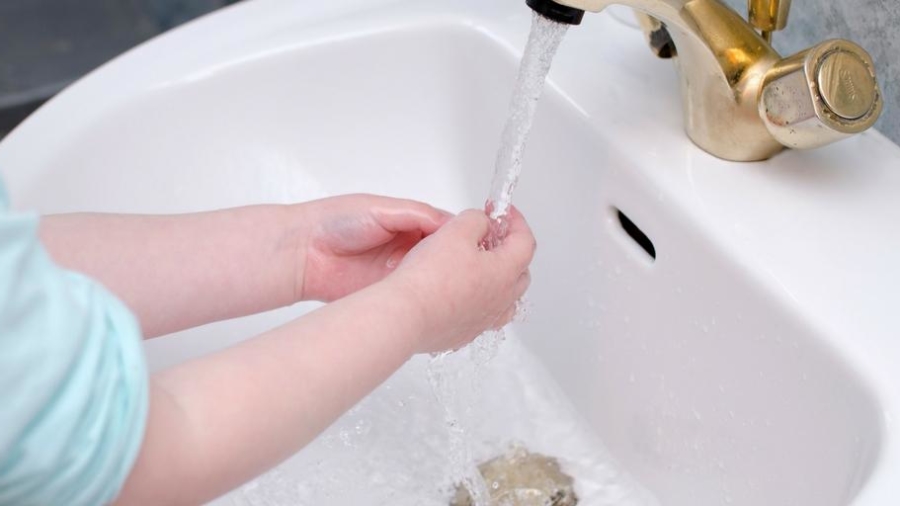
And it turns out, there’s more to washing our hands than just keeping them physically clean.

There are some really interesting psychological effects to handwashing.

3 interesting psychological effects of washing your hands (1)

1. Washing your hands can make you feel comfortable with your decisions.

We’ve all had those times when we make a decision, and then start to question whether we made the right choice or not.

Research carried out at the University of Michigan found that washing your hands straight after making a decision can put a stop to that doubt.  It’s as if washing your hands washes away any doubt that you might have made the wrong decision.

One of the researchers, Spike Lee, explains:

“Our studies show that washing your hands can symbolically “wipe away” these concerns… Once you washed your hands, you seem at ease with your decision and no longer need to do the mental work that makes the chosen alternative look much better than the rejected one.”

So next time you make a decision that you’re not 100% certain about, go and give your hands a wash to get rid of any last trace of that doubt.


2. It can change your luck.

Well, it can change how lucky you feel.  Think about how people on a winning streak often refuse to wash their ‘lucky’ socks, or shirt, or whatever.

They don’t want to wash away the luck by washing the item.  Well a study by Xu, Zwick and Schwarz in 2011 found that this idea translates to washing our hands too.

They set up a situation where people experienced ‘bad luck’ when gambling.  The people who washed their hands after this run of bad luck carried on betting afterwards as if they had forgotten all about their bad luck.

Those who didn’t wash their hands though, were more cautious with their future bets.

So if you want to move on from a spell of bad luck, try washing it away with soap and water.


3. Washing your hands can convince other people to do the same.

A public health study was carried out in 2009 that showed various messages to people as they went into public toilets.  There were messages like “don’t be a dirty soap dodger” and “water doesn’t kill germs, soap does”.

But the message that had the biggest effect was “Is the person next to you washing with soap?”.

Which makes sense when you think about it.

We so often are led by what other people are doing.  If we notice that another person in the toilet with us is washing their hands with soap, then we may well be more likely to do the same.

So I’ll be encouraging Rhys to wash his hands properly with soap by reminding him that this is what I do.  And by letting him see me wash my hands thoroughly as often as possible.

As for Nerys, she quite likes washing her hands anyway so doesn’t really need any encouragement!


So, there you have it.

Something to think about next time someone in your family is sick and you’re washing your hands for the thousandth time that day!


Mr and Mrs T Plus Three
3 tips to help you stick to your new year's resolutions

3 tips to get back on track with your new year’s resolutions

So, we’re a few weeks into the new year.  How are your resolutions going?

If you’re like the majority of people out there, you’re flagging a bit.  You might even have abandoned them already.

But don’t worry, I’ve got three tips to help you get back on track.

3 tips to get back on track with new year's resolutions (4)


1. Rephrase your resolution.

This is pretty interesting.  Studies have found that if you pose your goals and resolutions as questions then you’re more likely to change your behaviour.  So, rather than just saying “I’ll exercise twice a week”, you ask yourself “Will I exercise twice a week?” and then actually answer “yes”.

If you feel a bit strange talking to yourself like this you can get a friend to ask you the question, then you just have to answer “yes”.  Doing it this way has the added benefit of creating a bit of accountibility, as your friend will know that you made this promise.

But the studies show it works just as well if you just say it to yourself.

One of the authors of the paper, Eric Spangenberg, believes that the reason it works might be that being questionned about our intentions puts some pressure on us to follow through.  In other words, because we’ve answered that yes, we will do it, we then feel obligated to stick to that.


2. Partner up.

Following on from the first point, another great way to get back on track with resolutions and goals is to find an accountability buddy.

A study carried out at the Dominican University of California found that doing this can really improve your chances of sticking to your resolutions.  They asked participants to write down their goals and then send regular updates to their buddy, letting them know how they’re getting on.

Over 70% of the participants who did this ended up reaching their goals.  

This is amazing, especially when compared to the participants who didn’t have an accountability buddy.  Only 35% of that group met their goals.

So, ask around your friends and family and find someone who is also after some new motivation to meet their goals this year.  Then get going together and hold each other accountable.


3. Scale back and break it down.

One of the main reasons that people don’t stick to their resolutions or meet their goals, is that they’re just too big.

We often have unrealistic ideas of what we can achieve, or the timescale that we can achieve it in.  So we might start the year stating that we’re going to hit the gym 5 times every week.  That we’ll lose a stone by the end of January.  Or that we won’t drink any alcohol for a month, and will also cut out sugar from our diets.

These kinds of goals pretty much set us up for failure.  They’re either too big, require too much of a sudden, drastic change or they’re just not possible to achieve in a short amount of time.

So we get discouraged and quit trying altogether.

If you’re finding that, a few weeks into the new year, you’re feeling like you’ve already failed at your goals then just stop.

Rethink them.  Scale them back a bit to make them more realistic.  Give yourself a chance!


So there you have it.  

Three things you can try to make this the year you keep your resolutions and meet your goals!  Please do leave me a comment and let me know what you’re planning on achieving this year, and what you think of these ideas to help you get there.


sleep

4 things that affect the quality of your sleep

Sleep.

Possibly the number one topic of conversation for parents.

I’ve lost count of the number of times we’ve discussed sleep outside the school gates.  How the babies slept the night before.  How the boys slept.  And how we slept.

More often than not we’ll be talking about how badly we feel we slept.

Every now and then you’ll get the comment of, “I actually slept really quite well”, said in an incredulous tone.

And we then try and work out what was special about the previous night that resulted in a good night’s sleep!

The main factor at the moment is, pretty obviously, how well the children slept.

Well, it’s almost impossible to get a good night’s sleep when your toddler is shouting at random intervals and your 5 year old is up to go to the toilet at silly-o’clock in the morning.

But, there are other factors that can affect the quality of our sleep.  And these things are often within our control.

So, to try and help us all wake up feeling a bit more refreshed, here are 4 things that affect the quality of sleep.

4-things-that-affect-the-quality-of-your-sleep

1.  The room temperature.

The temperature of your bedroom can have a huge impact on how well you sleep.

Our bodies natually start to cool down in the evenings, and ideally our bedrooms will be on the cool side for us to sleep well.

Studies have found that a room temperature of between 18 and 20 degrees celsius is ideal for most people.

So if you find you’re tossing and turning in the night and feeling too warm, then think about sleeping with the window open a bit, or switching to a lower tog duvet to get a better night’s sleep.


2.  Noise.

Parents know better than anyone how much noise can affect our sleep!  We’ve all had those moments when the baby has just gone down for a nap and the postman comes and rings the doorbell and ruins everything!

But I think sometimes we don’t think so much about how different noises can affect our own sleep.

All sorts of things can disturb our sleep, especially when we’re in light, stage 2 sleep.  At this point things like our partner snoring, the neighbour’s tv being on super loud, or noise from passing traffic can really interfere with our sleep.

It’s often the sudden, unexpected noises that wake us up.  Like our partner talking in their sleep all of a sudden.  So playing white noise can often really help as it tends to block out these other, more random noises.

What is interesting though is that it’s been found that sounds that are meaningful are more likely to wake us up.  So we can play our white noise, safe in the knowledge that we will still wake up when our children need us, as we’re emotionally tuned in to the sound of their cries.


3.  Light levels.

There’s a reason why so many parents would have black-out blinds on their list of essential baby products.  Dark rooms are so much more conducive to a good night’s sleep.

Too much light in the room when we’re trying to get to sleep can interfere with our production of melatonin.  This is the hormone that signals our bodies to start preparing for sleep.  So we need to do what we can to keep light levels as low as possible when we’re trying to get to sleep.

So, consider blackout blinds to block out street lights that might shine in through your window.  Turn off the tv.  And consider covering up any little lights from chargers or sockets that might be glowing away and disturbing you.

It’s also interesting to know that red lights don’t interfere with our sleep quite so much, so you might want to think about using a night light with a red tint if you need to light the way to the bathroom in the middle of the night.


4.  Sleep cycles.

Waking up at the wrong point in a sleep cycle can really affect how refreshed you feel the next day.

Have you ever been woken up from a dream?  It happens to me a lot and it sucks.

It leaves me feeling groggy and like I’ve barely slept at all.  And that feeling often sticks with me for the whole day.

This is because dreams occur when we’re in REM sleep, which is a deep-sleep stage of our sleep cycle.  What we ideally need to do is wake up at the end of a complete sleep cycle, or during the start of the light sleep of stage 1 sleep.


I’ve been sent an S+ sleep tracking system to test out and review and I’m really excited to try it.  It monitors the various factors that affect our sleep and feeds back information about what we can do to improve the quality of our sleep.

One of the things it can do is set an alarm for you to wake up at the right stage in your sleep cycle, so you feel refreshed rather than groggy.  I think this is what I’m most looking forward to trying out.

I’ve always resisted the idea of waking up before my children.  It just feels wrong somehow!  But, if waking up 10 or 20 minutes before they start shouting means that I wake up at the end of a sleep cycle, then it has to be worth it!  It has to be better than being jolted out of a dream.

And my dreams are so random, it’s so disorientating being woken up from them with a start!

I’d love to know what you think about these factors.  

Do you try and set up your bedroom to get the best possible night’s sleep?  Do you ever wake up actually feeling refreshed?  Or have you given up on that idea while your children are still young?!

Please do leave me a comment and let me know.


Keep Calm and Carry On Linking Sunday
psychological-benefits-exercise

5 psychological benefits of exercise

I don’t know about you, but I find it really hard to fit exercise into my life at the moment.

Before I had Rhys I used to be in the gym several times a week, and would also do workout dvds at home.

But I just don’t feel like I have the time these days.

Although, I’m not sure that’s strictly true.  

I think it’s more that I don’t quite have the motivation to make the time for formal exercise at the moment.

I know it’s good for me physically, but that knowledge still isn’t quite enough to get me to do it!

What might get me moving though, is realising how much of an impact exercise can have on our psychological well-being.

Here are 5 psychological benefits of doing some exercise:

5-psychological-benefits-of-exercise1.  Exercise keeps our minds sharp as we get older.

Now, I’m only in my 30s, but I’m already aware that my brain isn’t as quick as it used to be.  And I don’t like the idea of my cognitive abilities going downhill any more than they already have thanks to baby brain!  So the fact that exercise has been found to improve cognitive function is a pretty good incentive to start moving more.  And this will get more and more important as I get older, as studies have shown that people who don’t do exercise to work on their cardiovascular fitness are up to 8 times more likely to develop dementia than people who do exercise.

2.  Exercise helps with anxiety and stress.

Now, I think we all know that exercise is a great stress-reliever.  But I wasn’t aware that it can be really helpful in dealing with anxiety too.  I have a problem with ocd and ‘checking’ and I’m pretty sure anxiety is a big part of that.  And I think a lot of parents live with a fair bit of anxiety with trying to juggle everything in their busy lives.  What we need to be doing then, is getting some aerobic activity in on a regular basis.  Studies have shown that this type of activity can reduce anxiety as well as our sensitivity to stress.  It might even help us overcome our anxiety all together.

3.  Exercise makes us more creative.

This one is pretty interesting to me, and is definitely a good incentive to start exercising.  Well, I can’t be the only blogger out there to suffer from writer’s block now and then!  A study by Steinberg et all in 1997 found that people who did an aerobic workout showed an increase in creative thinking.  So a brisk walk in the park really might get the creative juices flowing next time I’m stuck for something to blog about!

4.  Exercise helps us focus and pay attention.

One of the other things I struggle with at times is keeping my focus on one particular activity.  And I know this is something I need to work on if I want to be more productive with my time.  And interestingly enough, psychologists believe that getting regular exercise can improve connections between the cerebellum and the prefrontal cortex.  These connections can help to increase our ability to focus and pay attention, as the prefrontal cortex is involved in tasks that involve organization and attention.

5.  Exercise helps us sleep better.

This is a big reason for me to get more exercise.  Both my children are sleeping pretty well at the moment, but I’m still up with one or the other of them at least once a night.  And I often wake up feeling like my night has been really quite disturbed.  So knowing that I could help improve the quality of the sleep I do get is a pretty good incentive to start exercising more.  Although, it seems like I’d have to really step up my exercise regime for this to work.  A study was carried out with a group of young people and found that the participants who exercised vigorously in the evening fell asleep more quickly, woke up less in the night and slept better than those who either worked out less vigorously or didn’t work out at all.


So there you have it. 

5 pretty good reasons to take a look at my week and see where I can fit some exercise in.

I’m already trying to get 10,000 steps in every day, thanks to my fitbit.  But I need to start getting a couple of actual workouts in I think.  Either by digging out my old workout dvds or by using an online service like Hey Workout, which I tried out earlier in the year.  My full review of that will be up on the blog soon so do keep an eye out for it.

So what about you?  Do you exercise regularly?  What are your reasons for working out, or for not working out?!  Please do leave me a comment and let me know.
 

Mr and Mrs T Plus Three
Keep Calm and Carry On Linking Sunday