
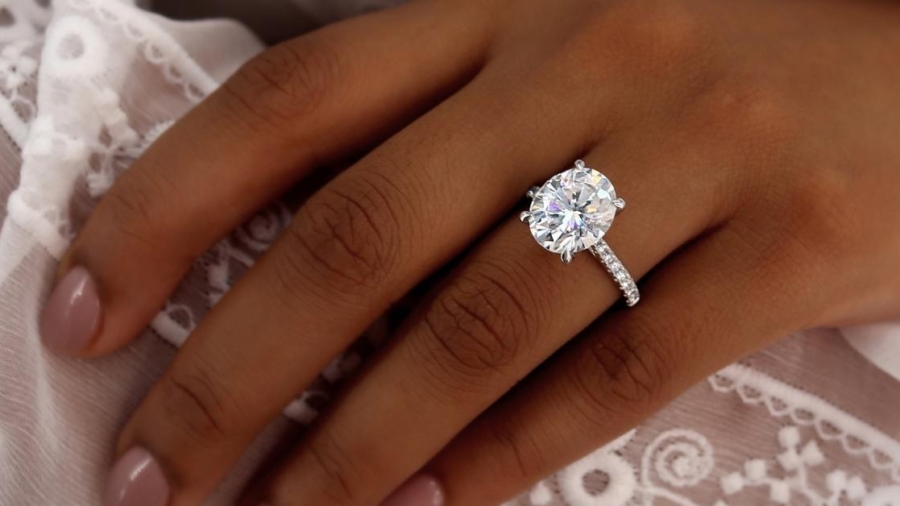
Moissanite is an extremely rare and precious white gemstone, formed from the naturally occurring mineral, silicone carbide.
This mineral was first found in a meteorite crater in Arizona and from then on it was developed by experts into an amazing mined diamond alternative.
Moissanite is extremely rare in nature (more than a diamond!) and almost all jewellery set with moissanite is lab grown. Only gemology experts can tell the difference between lab created and natural moissanite.
The way we produce moissanite has become close to perfect in recent years, through various growing processes with specialist laboratory equipment and scientists. Moissanite is grown by simulating the natural conditions and high pressures needed for moissanite to grow naturally, and are used to create a physically identical gemstone to that of a naturally occurring moissanite.
Moissanite is brilliantly sparkly!
Moissanite rings should be viewed as a unique gemstone in itself rather than a direct substitute of a diamond. It beholds its own unique attributes, that displays the true brilliance and quality of moissanite gemstones.
Due to the chemical structure of moissanite being different to a diamond, the rate it can bend, slow down and refract light is also different.
Its refractive index (RI) is more than a diamond, with a refractive index number of 2.65-2.69 that emits a ‘rainbow-like’ effect.
Moissanite is suitable for everyday wear
The durability of moissanite is another very desirable attribute of this fabulous gemstone! Many will argue that the durability of your engagement ring is one of the most important factors to consider when choosing the ring you’ll have for life.
It is well known that diamonds are the hardest gemstone on the planet, which is what makes them such a popular choice for engagement rings. Diamonds come in at a 10 on the Mohs Scale of Hardness, which is a scale used for measuring the scratch resistance of minerals.
Moissanite scores just behind diamonds as the second hardest mineral used for setting in jewellery, with a Mohs Scale of Hardness score of 9.25. Making moissanite an amazing choice for jewellery designed to be worn everyday, such as engagement rings.
Moissanite has ethical and sustainable credentials
As moissanite is grown in a laboratory, the mining processes are completely eliminated, which reduces the chances of any unethical practices occurring to communities or unsustainable environmental impacts. Unlike mined diamonds, lab grown jewellery such as moissanite and lab diamonds have a significantly smaller carbon footprint as all of the ethical implications involved with mining practices are eliminated.
The origins of mined natural diamonds can be very difficult to trace as there is such a long production process, the production and manufacturing transparency can often be lost.
Whereas all moissanite sold by Lily Arkwright are produced in a lab and all come fully certified, giving you complete peace of mind as to where your gemstone has originated from. In today’s current climate, consumers are becoming more aware of the ramifications of their purchases and that’s why we’ve seen a rise in lab grown jewellery.
More and more couples are opting for moissanite as an alternative green choice that also happens to look gorgeous!
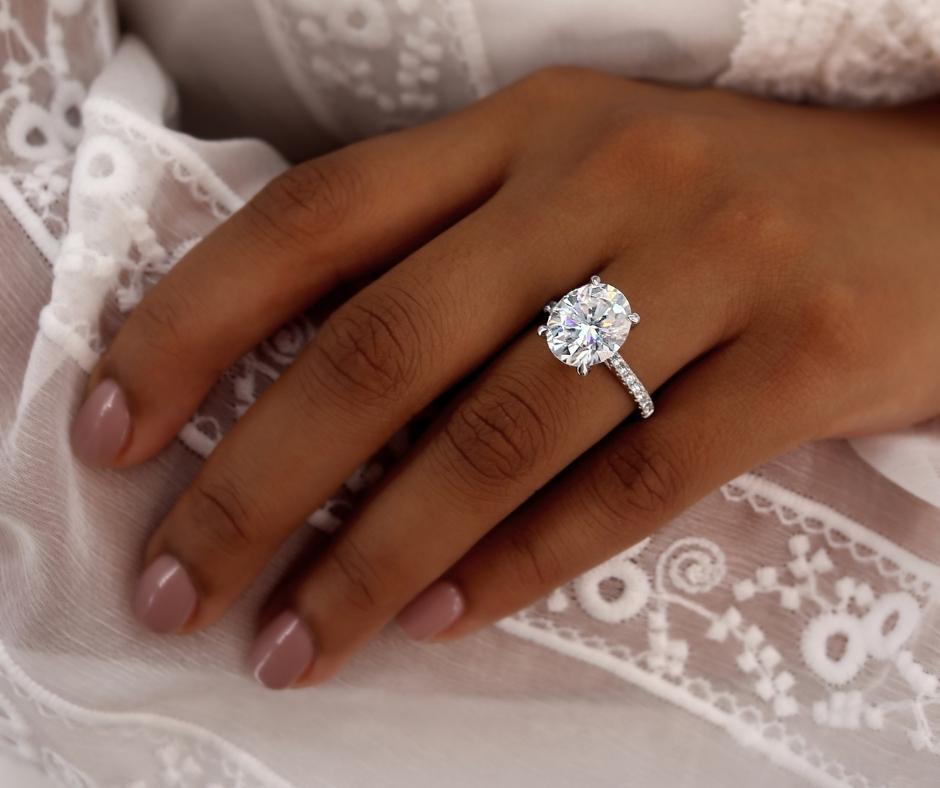
Moissanite is budget friendly
Moissanite is far more affordable than diamonds and this is a key factor for why more budget savvy couples are opting for moissanite as their feature stone in their engagement rings.
Moissanite costs dramatically less than diamonds, and can cost up to 90% less than a traditional mined diamond engagement ring. Therefore, choosing a moissanite centre stone provides you with more carats for the price! Allowing you to have a much larger carat weight (gemstone size) or higher clarity gemstone for a lower price point.
Considering a moissanite engagement ring?
If the idea of moissanite engagement rings has piqued your interest or you would like to find out more information about Lily Arkwright and their lab diamond collections simply call them on: 0161 537 6773, or alternatively you can email their jewellery consultancy team at: hello@lilyarkwright.com or book an in-person consultation.
Disclosure: this is a collaborative post