
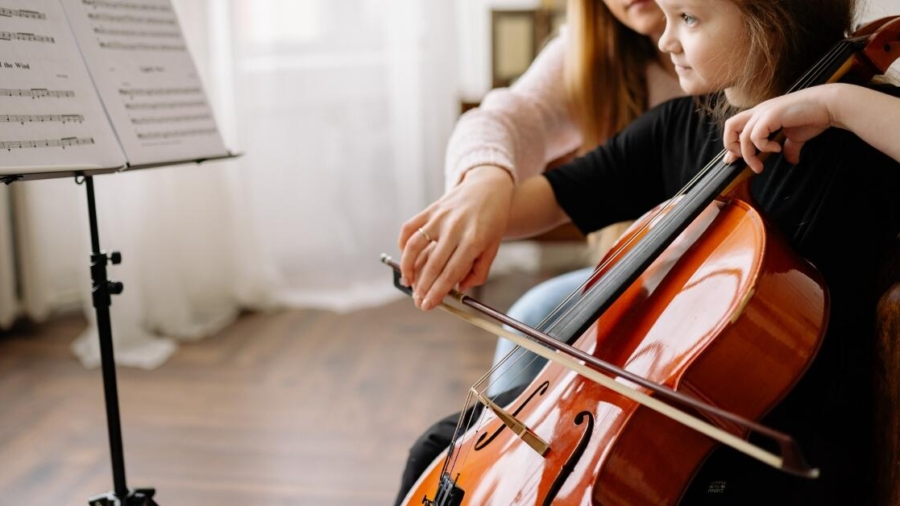
As parents, we often ponder the best ways to enrich our children’s lives and set them on a path to success. One avenue that has proven benefits is learning to play a musical instrument. The decision to encourage your child to learn an instrument goes beyond simply fostering a love for music.
In this blog post, we’ll explore the various reasons why introducing your child to the world of music can have lasting positive impacts on their development.
Cognitive benefits
Learning to play an instrument stimulates various areas of the brain, enhancing cognitive functions.
Studies have shown that children who engage in music education often perform better in subjects like mathematics and language. The process of reading sheet music, understanding rhythm, and coordinating hand-eye movements contributes to improved memory, concentration, and problem solving skills.
Emotional and social development
Playing an instrument provides a unique outlet for emotional expression. It allows children to convey their feelings through music, fostering emotional intelligence. Additionally, participating in group activities such as band or orchestra can improve social skills, teamwork, and communication.
Learning to collaborate with others in a musical setting can lay the groundwork for strong interpersonal relationships later in life.
Discipline and time management
Mastering an instrument requires consistent practice and discipline. By encouraging your child to learn an instrument, you’re instilling valuable life skills such as time management, perseverance, and a strong work ethic.
The commitment to regular practice teaches children that achieving proficiency in any skill requires dedication and sustained effort over time.
Boost in confidence and self-esteem
Success in learning an instrument contributes to a boost in confidence and self-esteem. As children progress and master new techniques, they gain a sense of accomplishment and pride.
Performing in front of an audience, whether it’s a small family gathering or a school concert, further enhances their confidence and poise.

Stress reduction and emotional wellbeing
Music has the power to soothe the soul and reduce stress, and is often a recommendation for students in London boarding schools to pursue.
Playing an instrument can serve as a healthy outlet for stress relief, helping children cope with the challenges they may face in their daily lives. The emotional wellbeing fostered through musical expression can contribute to a more balanced and resilient mindset.
Exploration of creativity
Learning an instrument encourages creativity and self-expression. It provides an avenue for children to explore their artistic side, experiment with different musical styles, and even compose their own pieces. The ability to create something unique fosters a sense of individuality and helps children develop their own voice.
Lifelong appreciation for music
By exposing your child to the joy of playing an instrument, you’re laying the foundation for a lifelong appreciation of music. Whether they continue to play casually or pursue music more seriously, the skills and love for music acquired during childhood often extend into adulthood, enriching their lives in countless ways.
In the grand symphony of life, encouraging your child to learn an instrument can be a harmonious decision with multifaceted benefits. From cognitive development and emotional wellbeing to fostering discipline and creativity, the positive impacts of musical education are vast.
As you consider this enriching journey for your child, remember that the goal is not necessarily to create the next musical prodigy but to provide them with a lifelong passion and skill that will resonate throughout their lives.
Disclosure: this is a collaborative post