
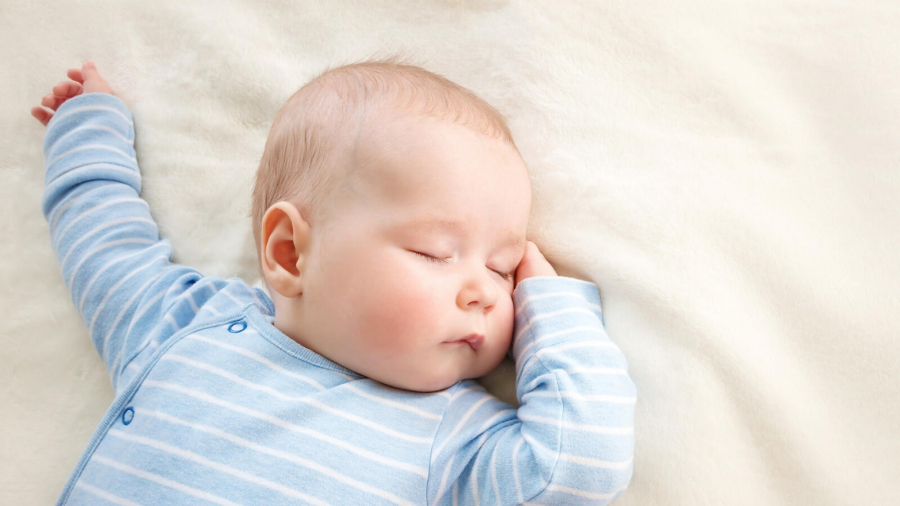
Sleep plays a crucial role in child development. It has a direct impact on learning and memory, cognitive performance, attention, behaviour and mood. It also has an essential part to play in overall mental and physical health, giving your child’s mind and body time to rest and recover.
As parents, we all want to make sure that our children are getting the sleep they need — even if they sometimes don’t seem to want it. The amount of sleep that your child needs varies considerably as they grow and navigate through each stage of their childhood, with this all-important rest time helping them in different ways as their brains and bodies develop.
To help you ensure that your children are on track with their sleep routines, the experts from CuddleCo are here with all the information you need. Use this handy guide for an idea of how much sleep is recommended depending on your child’s age.

Newborns (0-3 months old): 14-17 hours
It’s recommended that newborns get between 14 and 17 hours’ sleep in a 24-hour period.
This will be broken into a number of shorter periods, to accommodate feeding, so your baby will probably have daytime naps as well as longer periods of sleep through the night. Newborns need so much sleep because they’re growing at such a fast rate.
Plus, they have an incredible amount of new information to process, which, as you can imagine, is very tiring.
Despite baby sleeping for so many hours, parents will no doubt feel exhausted at this stage too.
This is because newborns are prone to sleeping in short bursts, with no real pattern to their snoozing. All newborn babies are different, and fluctuations in sleep patterns are completely normal, so don’t worry if yours isn’t getting exactly the recommended amount of sleep.
Infants (4-11 months old): 12-15 hours
At around 3 months of age, babies tend to start sleeping more during the night.
As they grow, they’ll need fewer night feeds and be able to sleep for longer periods, potentially even up to eight hours or more. At this stage, infants are getting more used to their day and night routine, and by four months you may find that they spend twice as long sleeping at night as they do during the day. In total, 12-15 hours’ sleep is the recommended amount for infants between 4 and 11 months old.
By 3 or 4 months of age, another big change is that most babies will be ready to move from a Moses basket or bassinet into a cot bed. Good nursery furniture sets will make all the difference at this stage, with a comfortable cot that will help your little one sleep safely and soundly and a dresser or changing table to keep you organised.
Toddlers (1-2 years old): 11-14 hours
It’s recommended that toddlers get between 11 and 14 hours of sleep per day. Toddlers will generally still nap, but less so than they did as infants — typically for only one or two hours per day.
A positive bedtime routine will help your toddler get ready for sleep, especially if they’re having trouble settling.
Preschool-aged children (3-5 years old): 10-13 hours
Parents should be aiming for their preschool-aged children to get around 10-13 hours of sleep per day. At this stage of their development, children may take shorter daytime naps and eventually stop napping altogether.
School-aged children (6-12 years old): 9-12 hours
It’s advised that school-aged children should get between 9 and 12 hours’ sleep each day.
The amount of sleep a child requires between these ages will vary significantly, as children grow and develop a lot between the ages of 6 and 12. Children at the younger end of this range will generally need more sleep than those who are older.
Teenagers (13-17 years old): 8-10 hours
A minimum of eight to 10 hours’ sleep is recommended for teens, especially on school nights. This may seem like a lot compared to adults’ recommended seven to eight hours, but teenagers’ bodies and minds are developing rapidly, and this additional sleep helps to meet their needs and keep them alert throughout the day.
Disclosure: this is a collaborative post