
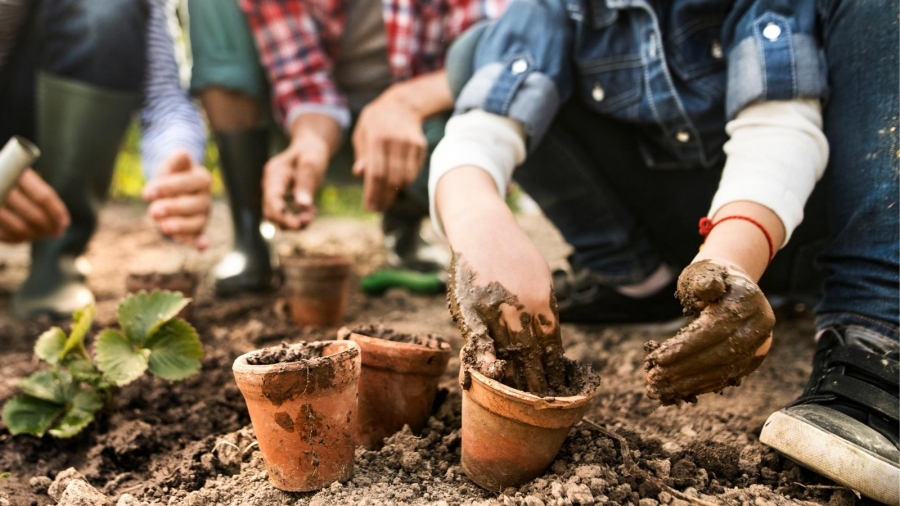
Spending time outdoors is extremely beneficial for your child’s development. Gardening specifically allows your child to learn new skills, develop self-confidence, play and have fun. Most children love being outdoors, and the fresh air is great for them.
However, it can sometimes feel incredibly difficult to get your children outside and away from all their screens, but all you need is the right approach and to remember to persevere.

How do you get the child interested?
Firstly, keep it simple, give them a small space or a few plants that are their responsibility. You can take them to visit community gardens, garden centres or botanic gardens to help them get some ideas for what you can do in your own garden as well as sparking their imagination. Younger children often like to play in the mud, but this can be something that they are told off for – encourage them to get dirty, it can really help to stimulate their brains. If you have older children, why not ask them to help you plan and design the garden this teaches them better spatial awareness as well as critical thinking skills.
If you have a particularly rambunctious child, getting a plant or two that requires more care can have a calming effect. For example, bonsai trees are great for fostering a sense of calm and tranquillity. Enlist their help in looking after your bonsai and make it into something that you do together. Yorkshire Bonsai has resources and advice that you can use. They also have all the equipment needed to properly care for a bonsai and the trees themselves.
What do the children learn?
Gardening can be educational, and it can lead to the development of many different skills and attributes. Children learn responsibility from caring for the plants; they also gain a better understanding of cause and effect. For example, if they don’t care for the plant properly, it dies. In addition, they can improve their self-confidence by achieving the goals set out for them, such as keeping the plants alive for a certain amount of time.
Gardening is also a good physical activity that promotes healthy behaviours. If you choose to grow vegetables, they can learn more about nutrition, and they get to eat the food they have grown and learn more about where it comes from. If you have more than one child, you can also teach them the importance of co-operation, by getting them to work together for the good of the garden.
Keeping your child safe in the garden
Whilst gardening is great for child development; it can also be a hazardous activity. The best thing that you can do to ensure your child’s safety in the garden is supervision. Do not let them handle tools or work unsupervised. Try to keep fertilisers and chemicals out of reach or garden without them if possible. Store all equipment and tools securely and safely. Make sure that the children are appropriately dressed for the weather too.
In conclusion
Gardening is one of those brilliantly wholesome activities that children still enjoy without a screen in sight. While screens can also be great educational tools, it is important to try and stimulate their minds without them too. Children love getting their hands dirty, and gardening can teach them a lot of valuable traits that they will need later in life.
Disclosure: this is a collaborative post