
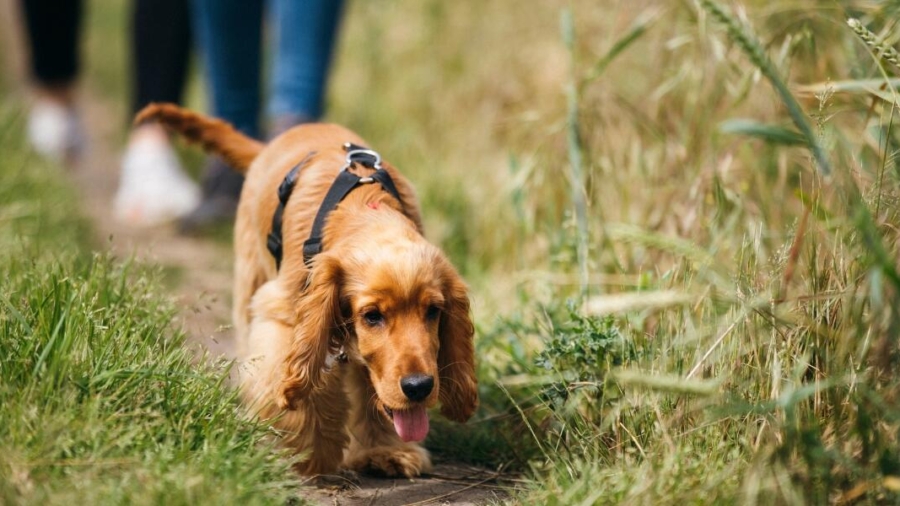
If you’ve ever opened the front door, stepped outside with your dog and felt like you’re walking a different animal than the one who was snuggled up on the couch five minutes ago… you’re not alone. Dogs can be funny like this. Calm indoors, almost ridiculously calm at times, and then you take them outside and boom. New personality unlocked. Some get overexcited. Others get nervous or stubborn or start sniffing the ground like they’re conducting serious science.
It’s easy to think something’s wrong, or maybe you’re doing something wrong, but honestly it’s usually just your dog being a dog in a world that feels bigger and noisier than home.
The Outside World Is a Whole Different Universe to Them
Inside the house everything is predictable. Same smells, same people, same spots they love to nap in. The outside world? It’s like a full movie theatre of smells and sounds and things moving at random speeds. Dogs experience everything more intensely than we do. A leaf blowing down the street is like breaking news to them.
And because they can’t filter things like we can, their behaviour changes. Their brain goes into “collect all information quickly” mode. Sometimes that looks like pulling, or hyperfocusing, or ignoring your commands because they’re concentrating on something their instincts say is important. It’s not disobedience, not really. It’s overstimulation mixed with curiosity.
Instincts Kick In When They Step Out the Door
Even the most domesticated dog has little bits of wild instinct inside them. When they go outside those instincts wake up a bit. Their senses sharpen. They scan for threats or opportunities or anything interesting. And because they don’t understand the difference between a real threat and a jogger with neon shoes, their reactions can seem dramatic.
This is also why tools like a halti lead for dogs can sometimes make walks feel smoother. It gently guides their attention back to you when their instincts pull them in ten different directions at once. Not as a correction, more like a soft reminder that you’re the team leader of this little adventure.
Your Dog Mirrors Your Energy (More Than You Realise)
Here’s something people forget: dogs watch you as much as they watch the environment. If you’re anxious, distracted, rushed or thinking about thirty different things they pick up on that energy. Outside where they already feel heightened your energy amplifies the whole experience.
So if you’re tense they might become more reactive. If you’re calm and slow and a little loose in your posture they usually relax sooner than you’d expect. Not always immediately of course. Dogs don’t adjust at the speed of a light switch. But they do notice.
Sometimes the best thing you can do for your dog’s outdoor behaviour is to give yourself a moment, deep breath, softer shoulders before stepping outside.
Routine Helps More Than You Think
Dogs thrive on patterns. Inside the home everything has a rhythm. When you take them outside at random times or different routes every single day or you’re switching between fast walks and slow walks with no real consistency their behaviour reflects that unpredictability.
Creating tiny rituals helps. Even small ones. Maybe you open the door and ask for a sit. Maybe you pause together at the end of the driveway. Maybe you speak softly to them before starting the walk. These signals help your dog understand the transition between “home mode” and “outside mode.”
It doesn’t fix everything instantly but it gives them a familiar anchor when everything else feels new.
Sometimes It’s Just… A Lot Out There
And honestly? Sometimes dogs act differently outside simply because the world is a lot. Not in a dramatic scary way. Just in a way their brains haven’t fully learned to process. Every dog is different. Some are confident. Some are anxious. Some are too eager. Some are cautious little observers. The environment affects them more than we think.
The key if you want one is patience. Slow introductions. Letting them look around instead of rushing. Rewarding calm moments. Letting them see you aren’t in a hurry. Helping them feel safe without hovering too much.
Behaviour outside isn’t a flaw. It’s communication. It’s them telling you, “Hey, this is new. This is exciting. This is overwhelming. I’m doing my best.”
Final Thoughts
They’re not misbehaving outside the house. They’re reacting, processing, exploring and trying to understand a world that’s way more intense than the quiet rooms they know so well. Their behaviour changes because everything changes, sounds, smells, energy, movement. And with a little patience, a routine and a sense of team between you both those outdoor moments become easier. Even fun. Even bonding.
Disclosure: this is a collaborative post