
Your holiday preparations are likely in full swing with one key decision remaining, choosing your ideal Christmas tree. Selecting between a genuine and an artificial tree can make a significant difference.
Each option has its unique benefits and drawbacks. Finding the most suitable tree isn’t easy. Consider everything from environmental impact and aesthetics to cost and convenience.
Let’s dive into the key differences between real and artificial trees. We’ll help you handpick the ideal one that makes your home gleam during your holiday festivities.
Real Christmas trees: a timeless classic
The sight and scent of a genuine Christmas tree in your living room is quite unlike anything else. Many people find this to be the essence of the Christmas season. Are actual trees, then, the ideal choice for everyone?
The natural appeal
Real Christmas trees have primarily aesthetic value. The scent of fresh pine or fir can bring back happy memories of former holidays. The distinctive form and texture of a real tree give your house an authentic, rustic look.
Every Christmas tree you choose is special and different, as no pair of trees are exactly the same. Plus, the family tradition of hunting down the perfect tree from a lot or a tree farm adds a dose of joy to the festive season.
Environmental considerations
At first glance, it appears contradictory to talk about environmental protection when we consider the annual chopping of trees. Yet, that’s not the case with Christmas tree farms.
These farms purposely cultivate trees to meet the holiday demand. For every tree cut down, several others are grown. This process not only assists in carbon dioxide absorption, but also supports wildlife.
Real trees are also biodegradable, hence after the holiday season they can be mulched or composted.
You’ll find that several local governments also offer tree recycling programs. They handle the collection, making it both an easy and eco-friendly way of getting rid of your tree.
The drawback is that actual trees require time and work. Getting your tree home and into the stand can sometimes feel like a wrestling match once you have picked one.
Of course, you will also have to water it routinely to prevent it from drying out. Nobody wants needles all over the carpet on Christmas Eve.
Not to mention, most real trees have to be disposed of by early January, which implies an annual commitment in both time and money. They are not forever.
Christmas tree set up
Professional service providers are ready to assist if you’re concerned about the logistics of putting a genuine tree in place.
Many Christmas tree suppliers provide delivery and installation services. This saves you the effort of personally moving and setting up the tree. If you are buying a large tree that can be challenging to move, this is particularly helpful.
Usually, these services ensure the tree is securely placed in its stand upright, allowing you to focus on the fun part which is decorating it.
Artificial Christmas trees: convenience with a dash of practicality
You could consider switching to an artificial tree if you’re tired of spending hours cleaning up pine needles. Keeping a real tree vibrant can also be a challenge, making the other option more appealing.
From the inexpensive plastic models of the past, artificial Christmas trees have gone a great distance. These days, they present a neat, mess-free substitute that appears remarkably lifelike.
Low maintenance and reusable
Convenience is perhaps the main advantage of an artificial tree. Once you have one, you will never have to worry about buying another. So basically, this is a one-time investment that will last years, or even decades.
There’s no need for you to stress about watering or constantly sweeping up fallen needles. Your Christmas tree comes all set and ready to sparkle. Just unbox it, put it together and voila!
Finally, as the holiday celebrations end, you can store your tree easily for next year.
Artificial trees are available in various sizes and styles, with some featuring built-in lights to save you time on decorations. Some models are so perfectly crafted that it is difficult to differentiate a fake tree from the actual one.
Eco-friendliness: a mixed bag
Sure, you can use artificial trees over and over again. However, these are made from PVC and often produced overseas. This means their carbon footprint surpasses that of real trees.
Unlike natural trees, these don’t break down naturally. Their production can also release harmful substances into our surroundings. More often than not, they end up as landfill trash once they’re considered outdated.
Artificial trees last for several years, therefore lessening the need for new purchases. Sticking with the same tree for a decade or even more can assist in compensating for the ecological costs tied to its production.
Therefore, even though fake trees aren’t the greenest option on paper, they can still be sustainable. This is especially true if they’re well-maintained and used over many years. And here are some Christmas tips about your kitchen.
Christmas tree assembly made easy
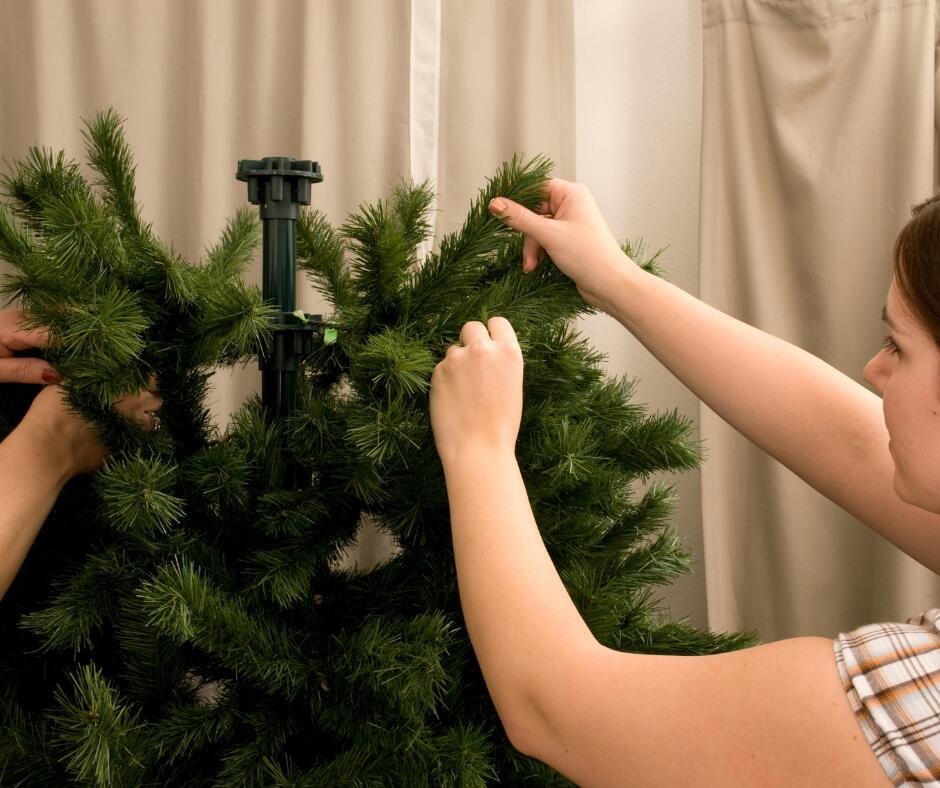
Usually, installing an artificial tree is no trouble. They often come in parts that easily connect, making the setup simple. Trees with pre-attached lights also save you from the tedious task of stringing lights yourself.
If the thought of setting up a Christmas tree overwhelms you, then this can also be handled. Specialized services are available to ensure your artificial Christmas tree is perfectly straight and fluffed to perfection.
Particularly if your tree is big or features complicated branches, this can save a lot of time and work.
Which tree is best for you?
After considering both choices, it’s time to decide which tree best fits your life, or this dilemma might have negative consequences on your mental health this Christmas. Both real and synthetic trees offer advantages, so the choice boils down to what matters most to you.
For the traditionalist, a real tree is most likely the answer. If Christmas just doesn’t seem like Christmas without the scent of pine, you know what to do.
If you prefer your holiday to be as eco-friendly as possible, choosing a real tree is a great option. You can recycle it afterwards, making it both festive and sustainable. A little extra work in terms of installation and care will be needed, though.
For the pragmatist, an artificial tree is a terrific option. If your holidays are already busy, you’ll appreciate having something that can be used year after year with minimal effort.
Long term, these trees provide simplicity, utility, and sometimes cost savings. There is no need for regular watering or gathering needles. Imagine the extra time you’ll have for wrapping gifts and enjoying hot cocoa. You can have all this if you skip the annual trip to the Christmas tree farm.
For the hybrid enthusiast, we know you want the best of both worlds. One option is to put up artificial trees around the house. Then, you could jazz it up with a small authentic tree, perhaps in your living room, as the main attraction.
This approach lets you enjoy the look and feel of a real tree without the hassle of maintaining multiple large trees.
There you have it!
Whether you cherish the musky scent of fresh pine or prefer the convenience of a reusable option, your ideal Christmas tree awaits. If you don’t want to compromise, employ the hybrid approach and enjoy a stress-free, needle-free holiday.
Just remember, in the end, the best Christmas tree is an adorned one.
Disclosure: this is a collaborative post